If you’ve spent any time texting, gaming, or scrolling through social media, you’ve probably seen someone reply with “XD” and wondered what it actually means.
The term looks simple, but it carries emotion, tone, and context that words sometimes can’t. People search for xd meaning in text because it pops up everywhere—from casual chats to memes—and it’s not always obvious how to interpret it.
Is it laughing? Sarcasm? Mocking? Or just internet randomness?
In reality, XD is a classic piece of online slang that expresses humor and strong laughter in a visual way.
It’s easy to type, universally recognized, and surprisingly flexible.
In this article, we’ll break down exactly what XD means, where it came from, how it’s used across platforms, and how you should respond when someone sends it to you.
What Does XD Mean in Text & Chat?
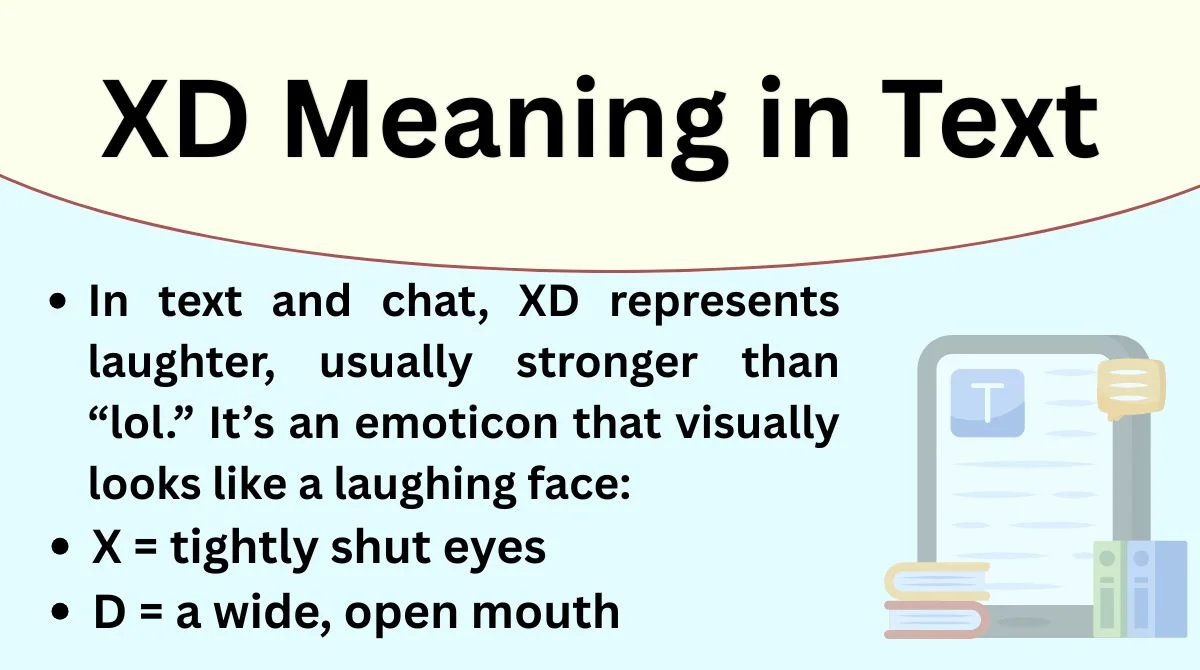
In text and chat, XD represents laughter, usually stronger than “lol.” It’s an emoticon that visually looks like a laughing face:
- X = tightly shut eyes
- D = a wide, open mouth
Together, they show someone laughing hard, often at something silly or unexpected. Unlike “lol,” which can sometimes feel polite or automatic, XD usually signals genuine amusement. It’s often used to react to jokes, funny mistakes, memes, or playful teasing.
Tone matters with XD. In most cases, it’s positive and friendly. However, depending on context, it can also imply sarcasm or playful mockery. Because it’s informal, XD fits best in casual conversations, not professional or formal messages.
Quick examples:
- “I just tripped over nothing XD”
- “That meme made my day XD”
- “You really said that? XD 😂”
Full Form, Stands For & Short Meaning of XD
XD does not have a full form. It doesn’t stand for specific words or phrases. Instead, it’s a visual expression, also known as an ASCII emoticon.
Short meaning of XD:
- Laughing hard
- Finding something very funny
- Reacting with humor or amusement
Unlike abbreviations like “BRB” or “OMG,” XD works more like a facial expression than a word. That’s why it feels expressive even though it’s just two characters.
Some people write it in lowercase (xd), but uppercase XD usually feels more expressive and energetic.
Origin, History & First Known Use of XD
XD originated in early internet culture, particularly in online forums, chat rooms, and gaming communities during the late 1990s and early 2000s. Before emojis existed, users relied on keyboard characters to show emotion.
It became especially popular in:
- IRC chat rooms
- Early messaging apps
- Online multiplayer games
As internet slang evolved, XD survived while many older emoticons faded away. Even with the rise of emojis 😂, XD stuck around because it feels fast, ironic, and internet-native.
How People Use XD in Daily Conversations
People use XD casually to keep conversations light and playful. It often appears at the end of sentences to soften tone or show humor.
Common uses include:
- Reacting to jokes
- Laughing at yourself
- Responding to memes
- Showing playful embarrassment
Examples:
- “I forgot my own password XD”
- “That plot twist was wild XD”
- “You’re impossible XD 😅”
XD Meaning Across WhatsApp, Instagram, TikTok & Snapchat
The meaning stays mostly the same, but tone can shift by platform:
- WhatsApp: Friendly laughter in chats and groups
- Instagram: Commenting on funny reels or posts
- TikTok: Reacting to ironic or chaotic content
- Snapchat: Casual, playful response in snaps
On visual platforms, XD often pairs with emojis to enhance the mood.
Different Meanings of XD in Other Fields
While rare, XD can mean different things outside texting:
- Gaming: Player reaction to funny moments
- Technology: Sometimes used as shorthand in filenames or versions (context-specific)
- Math/Variables: Used as random symbols (not slang-related)
Still, in text slang, XD almost always means laughter.
Common Confusions, Mistakes & Wrong Interpretations
People sometimes misunderstand XD as:
- Mocking (when it’s just playful)
- Childish (it’s informal, not immature)
- The same as “lol” (XD usually shows stronger emotion)
Using XD in serious conversations can also feel out of place.
Similar Terms, Alternatives & Related Slang
Related expressions include:
- LOL
- LMAO
- 😂
- 😆
- ROFL
Examples of XD in Real Chat Situations
- “That autocorrect fail was brutal XD”
- “You actually did that? XD 😂”
- “I can’t believe this happened XD”
How to Reply When Someone Says XD
You can reply with:
- Another XD
- A laughing emoji 😂
- A playful comment
- “Haha, same XD”
Match their energy to keep the vibe natural.
Is XD Still Popular? Trends & Online Usage
Yes, XD is still popular, especially among gamers, meme culture fans, and long-time internet users. While emojis dominate newer platforms, XD remains a nostalgic, expressive option that hasn’t fully disappeared.
FAQs
1. Does XD always mean laughing?
Yes, in most cases it means laughter or amusement.
2. Is XD rude or sarcastic?
Usually no, but context can make it sarcastic.
3. What’s stronger: LOL or XD?
XD usually shows stronger laughter.
4. Is XD outdated slang?
Not outdated, but more common among casual and gaming communities.
5. Can I use XD in professional chats?
It’s better avoided in formal or work-related conversations.
Conclusion
The xd meaning in text is simple but powerful.
It’s a visual way to express laughter, humor, and lighthearted emotion without needing extra words.
From its early internet roots to modern social media, XD has stayed relevant because it’s quick, expressive, and universally understood.
Whether you’re reacting to a meme, laughing at a mistake, or keeping a chat friendly, XD adds personality to digital conversations.
While emojis may come and go, XD holds a unique place in online culture—casual, nostalgic, and still effective.
Understanding when and how to use it helps you communicate more naturally and confidently in today’s digital world.

Freya Martin is a creative writer who loves playful wordplay, light humor, and engaging content for a global audience.