If you spend time texting, gaming, or scrolling social media, you’ve probably seen the word “wut.”
It looks strange at first, and many people wonder if it has a special meaning or hidden slang definition.
In reality, “wut” is a casual internet spelling of the word “what.”
People search for it because they want to understand online conversations better, avoid confusion, or reply correctly when someone sends it to them.
Slang evolves fast, and short spellings like “wut” help people type quickly and express tone, emotion, or humor.
This guide explains everything clearly — from its meaning and origin to how it’s used on platforms like WhatsApp, Instagram, TikTok, and Snapchat.
By the end, you’ll know exactly when and how to use “wut” naturally.
What Does WUT Mean in Text & Chat?
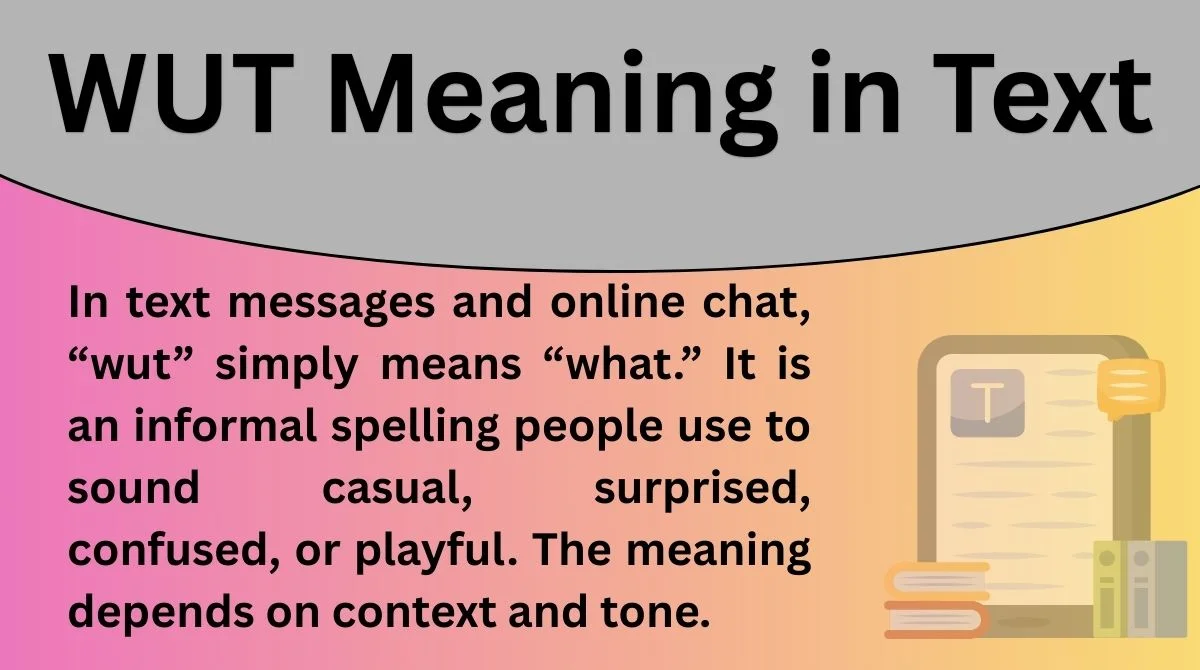
In text messages and online chat, “wut” simply means “what.” It is an informal spelling people use to sound casual, surprised, confused, or playful. The meaning depends on context and tone.
For example:
- Someone says something shocking → “wut???” shows surprise.
- You didn’t understand → “wut do you mean?” asks for clarification.
- A joke or meme → “wut 😂” reacts humorously.
Unlike formal writing, texting allows creative spelling. “Wut” can show personality, emotion, or internet culture awareness. Many people also use it to sound less serious or more relaxed.
Tone matters a lot:
- Single “wut” → mild confusion.
- “Wut???” → strong surprise.
- “wut lol” → amused disbelief.
It is rarely used in professional communication because it feels too casual. Instead, it belongs to friendly chats, gaming communities, memes, and social media comments.
Full Form, Stands For & Short Meaning of WUT
Unlike many internet abbreviations, “wut” does not have a full form. It is not an acronym. Instead, it is a phonetic spelling of the word “what.”
Short meaning:
WUT = WHAT (informal spelling)
People sometimes think it stands for something technical or coded, but that is incorrect. It’s simply creative spelling based on pronunciation.
Why people use it:
- Faster typing
- Casual tone
- Humor or sarcasm
- Internet culture style
You may also see similar variations:
- wat
- whut
- wuttt
All versions carry the same core meaning: asking “what?” or reacting to something unexpected.
Origin, History & First Known Use of WUT
The spelling “wut” became popular with the rise of internet chat rooms and early texting culture in the late 1990s and early 2000s. During that time, people used short spellings to save time and reduce typing effort on mobile keypads.
Gaming communities also played a big role. Players often typed quick reactions during fast gameplay, and “wut” became a common response to surprising moments.
Later, memes and social media helped spread the word even more. Funny images, reaction GIFs, and viral posts used “wut” to show confusion or disbelief in a humorous way.
Today, it is recognized globally and understood by most internet users, especially younger audiences familiar with online slang.
How People Use WUT in Daily Conversations
People use “wut” in casual digital conversations to react emotionally or ask questions. It often replaces “what” when the situation is informal.
Common daily uses:
- Asking for clarification
- Expressing shock
- Reacting to jokes
- Showing confusion
- Playful teasing
Examples:
- “wut are you doing?”
- “wut happened??”
- “wut 😂 that’s chaotic”
- “bro wut”
The spelling creates a relaxed, friendly vibe. It can also soften a message so it doesn’t sound too serious.
However, tone depends on context. In some cases, “wut” might sound rude if used alone without explanation, especially in sensitive conversations.
WUT Meaning Across WhatsApp, Instagram, TikTok & Snapchat
The meaning of “wut” stays the same across platforms, but the tone and purpose can change depending on the environment.
WhatsApp:
- Used in personal chats with friends or family.
- Often shows confusion or surprise.
Instagram:
- Common in comments reacting to posts or reels.
- Often humorous or sarcastic.
TikTok:
- Seen in comment sections reacting to unexpected videos.
- Usually playful or dramatic.
Snapchat:
- Used in quick messages between friends.
- Often paired with emojis or pictures.
Examples:
- “wut is this 😂”
- “wut did I just watch”
- “wut?? no way”
Social platforms encourage informal language, which is why slang like “wut” thrives there.
Different Meanings of WUT in Other Fields
Although rare, “WUT” can appear in other contexts outside texting. These meanings are unrelated to slang.
Possible alternate uses:
- Abbreviation for organizations or technical terms
- Acronyms in academic or professional fields
- Typographical errors for “WT” or “WUT” codes
However, in everyday digital communication, 99% of the time it simply means “what.”
Common Confusions, Mistakes & Wrong Interpretations
Many people misunderstand “wut” because it looks unusual. Common mistakes include:
- Thinking it is an acronym
- Assuming it has a secret slang meaning
- Believing it is rude or insulting
- Confusing it with “WTF”
In reality, it’s harmless and casual. The only issue comes from tone. If someone sends just “wut” without context, it may sound annoyed. Adding emojis or words can make it friendlier.
Similar Terms, Alternatives & Related Slang
There are many similar ways to say “what” online:
- wat
- whaaat
- huh
- whattt
- wdym (what do you mean)
- huh?
- bro what
Examples of WUT in Real Chat Situations
Here are natural examples you might see:
- “wut are you talking about 😂”
- “wut?? you quit your job?”
- “wut happened last night”
- “bro wut that’s ridiculous😭”
- “wut do you mean by that”
Short reactions:
- “wut 😳”
- “wut lol”
- “WUT???”
These examples show surprise, confusion, humor, or disbelief.
How to Reply When Someone Says WUT
Your reply depends on context. Usually, the person wants clarification.
Good responses:
- Explain again: “I said I’m moving next week.”
- Add details: “I meant the meeting is canceled.”
- Joke back: “You heard me 😄”
Friendly replies:
- “Haha yes, it’s true!”
- “I know, chaotic right?”
- “Let me explain…”
If the tone seems confused, clarity is best. If it’s playful, humor works well.
Is WUT Still Popular? Trends & Online Usage
Yes, “wut” is still used today, though trends change over time. Short slang words remain popular because they are easy and expressive.
Younger users and gaming communities use it more often than older generations. Memes and reaction culture also keep it alive.
However, some people prefer standard spelling (“what”) in messages now, especially with improved phone keyboards and voice typing.
Overall, “wut” remains recognizable and widely understood across the internet.
FAQs
1. Is “wut” rude?
No. It’s casual. Tone depends on context and punctuation.
2. Does “wut” mean the same as “what”?
Yes. It’s simply an informal spelling.
3. Who uses “wut” the most?
Mostly younger people, gamers, and social media users.
4. Can I use “wut” in professional messages?
It’s better to avoid it in formal or work communication.
5. Why do people spell “what” as “wut”?
For speed, humor, and a relaxed internet style.
6. Is “wut” outdated slang?
No. It’s still used, though less than in early internet years.
Conclusion
The meaning of “wut” in text is simple: it’s an informal way of saying “what.”
People use it to show confusion, surprise, humor, or disbelief in casual conversations.
While it started in early internet culture, it continues to appear across messaging apps and social media today.
Understanding slang like “wut” helps you communicate more naturally online and avoid confusion when chatting with friends.
The key thing to remember is context.
Tone, punctuation, and emojis change how it feels.
Used correctly, it adds personality and fun to conversations.
Whether you choose to use it or not, knowing its meaning keeps you fluent in modern digital language.

Freya Martin is a creative writer who loves playful wordplay, light humor, and engaging content for a global audience.