Last updated on February 12th, 2026 at 02:32 pm
If you spend time chatting online, you have probably seen the word “wtv” pop up in messages, comments, or captions.
Many people search for the wtv meaning in text because internet slang changes fast, and short forms can be confusing at first.
“Wtv” is a simple abbreviation, but its tone can vary depending on how someone uses it.
Sometimes it sounds casual and relaxed, while other times it may feel dismissive or emotional.
Understanding these small differences helps you read conversations more clearly and avoid misunderstandings.
In this guide, you will learn what “wtv” means, where it came from, how people use it across apps like WhatsApp and TikTok, and how you should reply when someone sends it to you.
Everything is explained in clear, easy language so you can quickly understand and use the slang naturally in your daily chats.
What Does WTV Mean in Text & Chat?
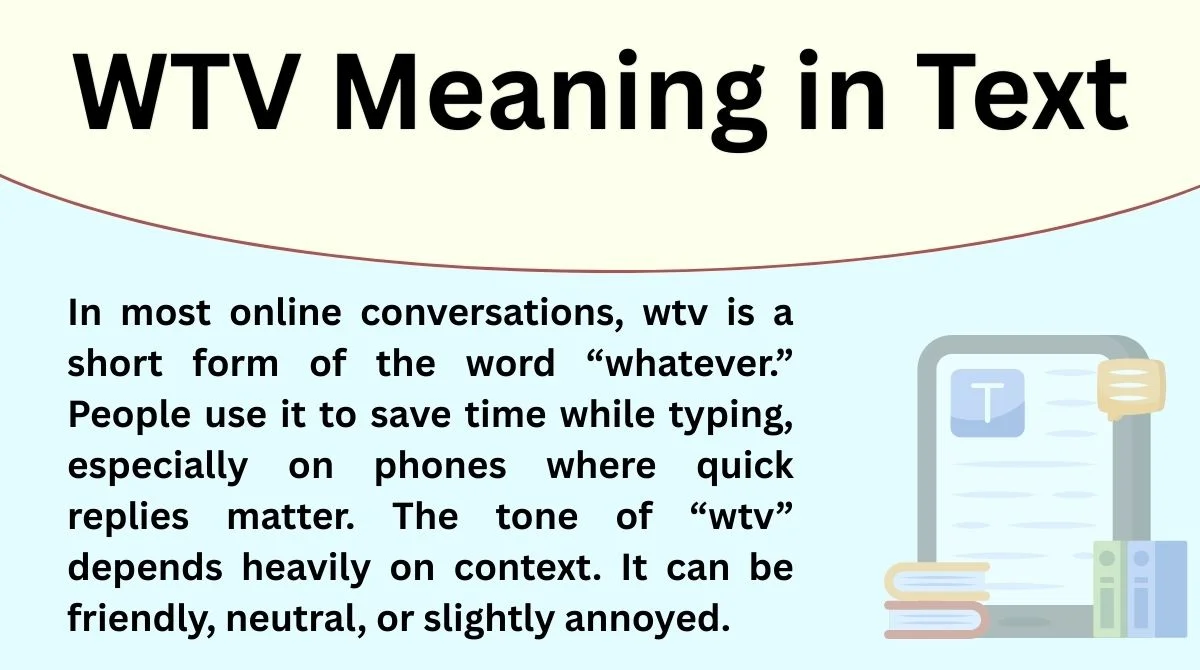
In most online conversations, wtv is a short form of the word “whatever.” People use it to save time while typing, especially on phones where quick replies matter. The tone of “wtv” depends heavily on context. It can be friendly, neutral, or slightly annoyed.
When someone writes “wtv,” they usually mean one of these things:
- They do not mind the outcome.
- They want to end a discussion.
- They feel relaxed or casual about a topic.
- They are slightly frustrated but don’t want to argue.
Because texting removes voice tone and facial expressions, readers often misunderstand short slang. For example, “wtv” might look rude if you do not know the person well, even if they meant it playfully.
Here are a few quick examples:
- “Pick any movie, wtv works for me 👍”
- “You never listen… wtv.”
- “I’ll just go alone, wtv 😅”
Notice how each sentence feels different. That’s why context matters more than the word itself. Teenagers and young adults often use “wtv” casually, while older users may prefer writing the full word “whatever.”
In short, wtv is a relaxed shortcut that shows indifference or flexibility, but you should read the conversation around it before deciding what the sender truly means.
Full Form, Stands For & Short Meaning of WTV
The full form of WTV is simple: “Whatever.” Unlike some internet abbreviations that have multiple expansions, this one is usually straightforward. However, the meaning behind it can change based on emotion, personality, and situation.
Short Meaning
At its core, “wtv” expresses:
- Indifference
- Acceptance
- Mild annoyance
- Flexibility
It is often used when someone does not want to debate further or when they feel the choice is not important.
Why People Shorten It
Typing “whatever” takes more time than “wtv.” Social media culture favors speed, which is why short forms like “idk,” “brb,” and “tbh” became popular. “Wtv” fits perfectly into this fast typing style.
Tone Variations
Even though the letters stay the same, tone can shift:
- Neutral: “Wtv you decide is fine.”
- Positive: “Wtv makes you happy 😊”
- Negative: “Wtv… I’m done talking.”
Because tone changes easily, many people add emojis or extra words to avoid sounding cold.
If you are writing a blog about slang, you could internally link this section to pages like:
- “IDK meaning in text”
- “TBH full form in chat”
- “SMH meaning explained”
These connections help readers understand how “wtv” fits into the larger world of internet abbreviations.
Origin, History & First Known Use of WTV
Like many texting abbreviations, “wtv” grew from early internet chatrooms and SMS culture. In the late 1990s and early 2000s, mobile phones had small keyboards and character limits. People shortened common words to save space and type faster.
“Whatever” was already a popular casual word in spoken English. Over time, users began dropping vowels to make it shorter. That is how “wtv” appeared alongside similar styles like:
- “pls” instead of please
- “msg” instead of message
- “tmrw” instead of tomorrow
Early online forums and gaming chats helped spread these shortened forms. As smartphones and social media apps became common, teenagers adopted “wtv” because it felt quick and expressive.
Interestingly, the abbreviation never became formal or official. It stayed mostly within casual texting culture. Unlike acronyms such as “LOL,” which entered dictionaries, “wtv” remains an informal slang choice.
Today, its usage continues because typing habits favor speed. Short forms are easier to send during fast conversations, especially in group chats or comment sections.
Even though the origin is simple, the meaning evolved with internet culture. What started as a typing shortcut became a way to show mood, attitude, or personality in just three letters.
How People Use WTV in Daily Conversations
People use “wtv” in many everyday chat situations. The key reason is convenience. It helps someone respond quickly without writing a long explanation.
Common Uses
Here are typical ways you may see it:
- Ending a small disagreement.
- Showing you are okay with any plan.
- Replying casually when you feel tired or uninterested.
- Acting playful or sarcastic with friends.
Examples in Daily Chat
- “Pizza or burgers?”
“Wtv, I’m hungry 😂” - “We can meet at 6 or 7.”
“Wtv works.”
In friendly conversations, “wtv” often sounds relaxed. But when used alone, it may seem cold. For example:
- “Fine. wtv.”
This version can feel dismissive, so tone matters a lot.
Tips for Using It Naturally
- Add emojis if you want to sound friendly.
- Use full sentences if you want to avoid misunderstanding.
- Avoid using it in professional chats or emails.
Many people combine “wtv” with other slang:
- “idk wtv you want”
- “wtv lol”
- “ok wtv”
If you are writing related content, you could link internally to pages about texting etiquette or common slang lists so readers understand when casual language is appropriate.
WTV Meaning Across WhatsApp, Instagram, TikTok & Snapchat
Although “wtv” has the same core meaning everywhere, each platform gives it a slightly different vibe.
On WhatsApp, people often use “wtv” in private chats or family groups. It usually means flexibility rather than attitude.
Example:
- “We’ll watch a movie tonight.”
- “Sure, wtv you choose 👍”
On Instagram, you might see “wtv” in captions or comments. Here it often sounds confident or carefree.
- “Wtv happens, happens.”
- “Just living life, wtv 😎”
TikTok
TikTok users use short text heavily, so “wtv” fits perfectly in captions. It may express humor or sarcasm.
- “I tried cooking… wtv lol.”
Snapchat
Snapchat conversations are fast and casual. “Wtv” here often means “I don’t mind” or “do what you want.”
- “Meet later?”
- “Wtv, text me when free.”
Even though the meaning stays similar, the tone changes depending on platform culture. Visual apps like TikTok and Instagram make it feel playful, while messaging apps may make it feel more direct.
Different Meanings of WTV in Other Fields
While “wtv” usually means “whatever” in text slang, it can have different meanings in specific contexts.
Media & Broadcasting
Sometimes WTV appears as part of TV station names or abbreviations. In these cases, it does not mean slang at all.
Gaming Communities
Gamers may use “wtv” as a quick response during live chats when they want to continue playing without typing long messages.
Personal Notes or Drafting
Some people write “wtv” in private notes as a placeholder word when they plan to edit later.
Because abbreviations change depending on context, always check where you see the word. A slang meaning in a chat may not apply in professional or technical writing.
Common Confusions, Mistakes & Wrong Interpretations
Many readers misunderstand “wtv” because it looks blunt. Without tone, it can feel rude even when the sender meant something harmless.
Common Mistakes
- Assuming it always means anger.
- Using it in formal emails.
- Sending it alone without context.
For example:
- “ok wtv.” — could sound annoyed.
- “wtv you like 😊” — sounds friendly.
Another confusion is mixing it with similar abbreviations like “wth” or “wtf.” These have very different meanings, so using the wrong one may change the tone completely.
How to Avoid Misunderstandings
- Add emojis if you want to soften the message.
- Write a full sentence when talking to someone new.
- Notice how the other person usually texts.
Learning these small differences helps you communicate clearly and prevents awkward conversations.
Similar Terms, Alternatives & Related Slang
Internet slang evolves quickly, and “wtv” belongs to a larger group of casual abbreviations. Knowing similar terms helps you understand online conversations better.
Popular Alternatives
- IDC – I don’t care
- IDK – I don’t know
- TBH – To be honest
- NVM – Never mind
- IG – I guess
Each one has a slightly different feeling. For example, “IDC” can sound stronger than “wtv,” while “IG” sounds softer and more thoughtful.
When to Use Alternatives
- Use “IG” if you want to sound unsure but polite.
- Use “NVM” when you want to cancel a thought.
- Use “wtv” when you feel relaxed about a decision.
👉 Internal linking idea: connect this section to pages explaining “IDC meaning in text,” “NVM abbreviation,” or “IG slang meaning.”
Examples of WTV in Real Chat Situations
Here are realistic chat examples showing how people use “wtv” naturally.
Friendly Tone
- “Let’s order dessert?”
“Wtv, I’m in 😄” - “Blue shirt or black?”
“Wtv looks better.”
Neutral Tone
- “We might be late.”
“Wtv, just text me.”
Slightly Annoyed Tone
- “You forgot again…”
“Yeah, wtv.”
Quick Bullet Examples
- “Wtv happens, happens.”
- “Wtv you say boss 😂”
- “I’m tired… wtv.”
- “Pick a place, wtv works.”
- “Wtv lol.”
These examples show how tiny changes in wording or emoji can change the emotional impact.
How to Reply When Someone Says WTV
When someone sends “wtv,” your reply should match the mood of the conversation.
If It Sounds Friendly
Reply casually:
- “Alright 😄”
- “Cool, let’s go with that.”
If It Sounds Neutral
Clarify gently:
- “Are you sure you don’t mind?”
- “I can choose if you want.”
If It Sounds Annoyed
Stay calm and respectful:
- “Did I say something wrong?”
- “We can talk later if you want.”
Avoid overthinking one short message. Sometimes people type quickly without realizing how their words sound.
Is WTV Still Popular? Trends & Online Usage
Yes, “wtv” is still widely used, especially among younger users. Short-form slang continues to grow because social media favors fast typing and casual tone.
Why It Remains Popular
- Easy to type.
- Works in many situations.
- Fits meme and chat culture.
However, trends shift quickly. Some users now prefer writing full words again to avoid sounding cold or dismissive. Emojis, voice notes, and GIFs also reduce the need for ultra-short text.
On platforms like TikTok and Snapchat, slang cycles come and go. While “wtv” may not be as iconic as “LOL,” it remains common in everyday conversations and group chats.
FAQs
1. Does WTV always mean whatever?
Most of the time yes, but tone depends on context and emojis.
2. Is WTV rude to use?
Not always. It can sound rude if used alone or during arguments.
3. Can I use WTV in professional messages?
It’s better to avoid slang in formal communication.
4. What’s the difference between WTV and IDC?
“IDC” sounds stronger, while “wtv” feels more relaxed.
5. Do adults use WTV or only teens?
Anyone can use it, but younger users use it more often.
6. Is WTV popular on TikTok?
Yes, it appears in captions and casual comments frequently.
Conclusion
Understanding the wtv meaning in text helps you read online conversations more clearly and avoid confusion.
At its simplest, “wtv” means “whatever,” but its tone can shift from friendly to frustrated depending on context.
Social media culture made this abbreviation popular because people want fast, simple ways to communicate.
By paying attention to emojis, sentence structure, and the overall conversation, you can easily tell whether someone is being relaxed, playful, or slightly annoyed.
If you plan to use “wtv” yourself, keep it casual and avoid formal situations.
Like most internet slang, it works best with friends and informal chats.
As language continues to evolve online, small abbreviations like this will keep shaping how we connect and express ourselves in everyday digital conversations.

Freya Martin is a creative writer who loves playful wordplay, light humor, and engaging content for a global audience.