If you’ve recently seen “TMU” in text messages or online chats, you’re not alone.
Many people come across this short abbreviation on WhatsApp, TikTok, Snapchat, or Instagram and wonder what it really means.
Internet slang changes fast, and new shortcuts appear every year, which makes it easy to feel confused.
That’s why searches for “tmu meaning in text” keep growing — people want a simple, clear explanation without complicated language.
In this guide, you’ll learn the full meaning of TMU, where it came from, and how people actually use it in real conversations.
We’ll also look at different meanings across fields, common misunderstandings, and how to reply when someone sends it to you.
Whether you’re new to online slang or just curious, this article breaks everything down in a friendly, easy-to-read way.
What Does TMU Mean in Text & Chat?
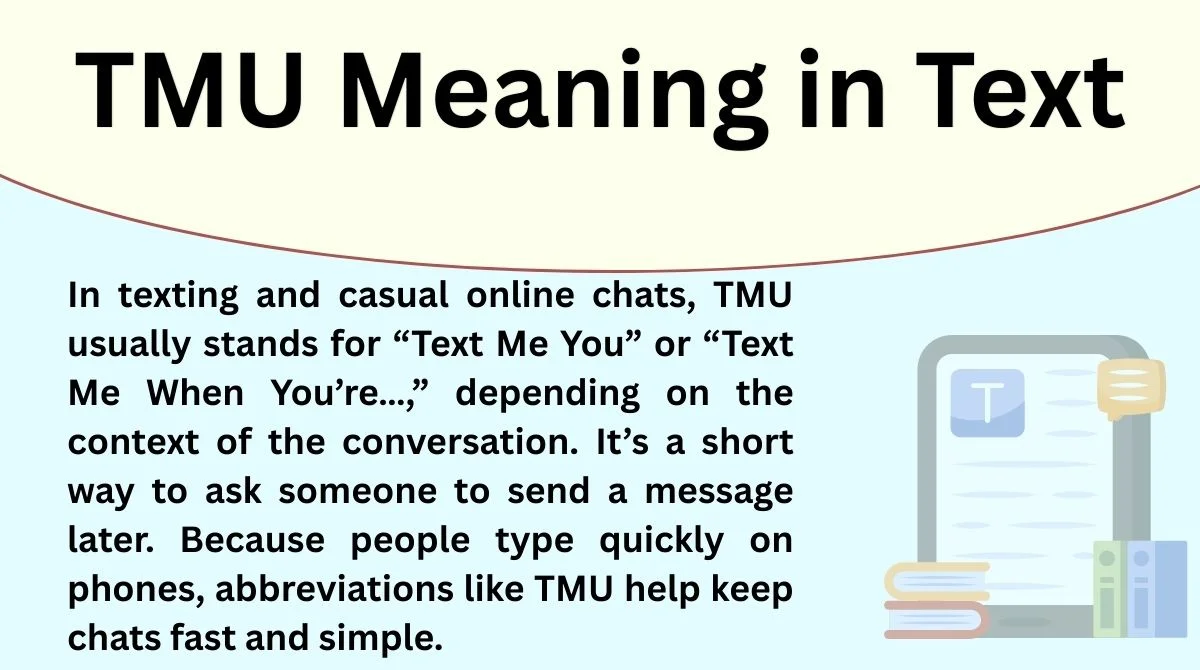
In texting and casual online chats, TMU usually stands for “Text Me You” or “Text Me When You’re…,” depending on the context of the conversation. It’s a short way to ask someone to send a message later. Because people type quickly on phones, abbreviations like TMU help keep chats fast and simple.
Unlike some slang terms with only one strict definition, TMU can be flexible. For example, one person might use it to say “text me when you’re free,” while another might use it simply as “message me later.” The real meaning comes from the tone of the chat and the sentences around it.
Here are a few quick examples:
- “I’m heading out now, TMU when you arrive.”
- “Busy at work 😅 TMU tonight.”
- “Can’t talk now — TMU later.”
Many users like TMU because it saves time without sounding too formal. It’s also easy to understand once you see it used a few times.
However, it’s not as common as famous slang like “BRB” or “OMG,” so some people may need clarification. If you’re unsure, don’t hesitate to ask the sender what they meant — online slang often changes from group to group.
Full Form, Stands For & Short Meaning of TMU
The most common interpretation of TMU in texting is:
- TMU = Text Me You / Text Me When You
While that may look incomplete grammatically, remember that slang often skips small words to stay short. The goal is speed, not perfect sentence structure.
Short Meaning
In simple words, TMU usually means:
👉 “Send me a message later.”
👉 “Message me when you’re ready.”
👉 “Let me know by text.”
People use it when they don’t want a long conversation at the moment but still want to stay connected. It acts like a soft reminder without sounding demanding.
Why Abbreviations Like TMU Exist
Online conversations move fast. Typing full sentences every time can feel slow, especially on mobile devices. That’s why abbreviations evolve naturally. TMU fits into a larger group of texting shortcuts such as:
- LMK — Let Me Know
- TTYL — Talk To You Later
- HBU — How About You
These terms help create a relaxed, casual tone. Younger users often mix them into everyday chats, but you may also see adults using them in informal conversations.
👉 Internal linking idea: You could connect this section to pages explaining “LMK meaning in text” or “TTYL slang meaning.”
Origin, History & First Known Use of TMU
Unlike older abbreviations that started in early internet forums or SMS culture, TMU doesn’t have a single clear origin story. It appears to have grown gradually from modern texting habits where people shorten phrases to the smallest possible form.
During the rise of smartphones and messaging apps, users began dropping extra words from sentences. Instead of writing “Text me when you arrive,” many shortened it step by step:
- Text me when you → TM when you
- Eventually → TMU
This pattern is common in online language evolution. Slang doesn’t always begin with one creator — it spreads organically when groups start copying each other’s typing style.
Another reason TMU became popular is the increase in voice-note and quick chat culture. People often send short instructions while multitasking. A three-letter abbreviation saves time and effort, especially when chatting rapidly.
Although TMU is not as old as classic SMS slang, it reflects modern digital communication trends:
- Faster typing
- Shorter attention spans
- Informal communication style
Because it’s relatively new compared to traditional acronyms, you may notice that some people still don’t recognize it. That’s normal — online language keeps evolving, and newer terms take time to become widely understood.
How People Use TMU in Daily Conversations
TMU fits naturally into casual, everyday chats. Most of the time, people use it to pause a conversation or schedule a follow-up message. It’s polite but direct, which makes it popular among friends and classmates.
Common Situations Where TMU Appears
- When someone is busy:
- “In a meeting right now 😬 TMU after 5.”
- When plans are being made:
- “Not sure about the time yet — TMU once you know.”
- When ending a chat quickly:
- “Battery low 🔋 TMU later!”
The tone is usually relaxed and friendly. It doesn’t feel formal or serious, which is why it rarely appears in professional emails or official communication.
Why People Like Using TMU
- Saves time typing long sentences
- Feels casual and modern
- Easy to combine with emojis or other slang
However, context matters a lot. Some people may interpret TMU slightly differently depending on how they normally text. If you’re chatting with someone older or less familiar with internet slang, they might ask what it means.
👉 Tip: If you want to sound clearer, you can mix TMU with a few extra words, like “TMU when you’re free.”
TMU Meaning Across WhatsApp, Instagram, TikTok & Snapchat
The meaning of TMU stays mostly the same across different platforms, but the way people use it can change slightly depending on the app’s style.
On WhatsApp, TMU often appears in quick planning messages:
- “Going offline now, TMU later 👍”
- “TMU when you reach home.”
Because WhatsApp chats feel more personal, the abbreviation usually sounds friendly and casual.
On Instagram DMs, TMU may show up during short conversations between followers:
- “Busy editing reels 😅 TMU tomorrow.”
Users often combine it with emojis or reactions.
TikTok
TikTok comments move fast, so slang gets shorter. TMU might appear when creators tell followers to continue the chat elsewhere:
- “Can’t reply here — TMU on IG.”
Snapchat
Snapchat’s quick-reply culture makes abbreviations popular. TMU is often used with snaps or streak conversations:
- “Phone dying 😭 TMU later.”
Even though each platform has a different vibe, TMU generally keeps the same core idea: asking someone to message later.
👉 Internal linking idea: Link to guides like “Snapchat slang meanings” or “Instagram DM abbreviations list.”
Different Meanings of TMU in Other Fields
While TMU mainly appears as texting slang, it can also have completely different meanings outside social media. This is where confusion often happens.
Technical or Business Use
In industrial engineering, TMU can stand for Time Measurement Unit, which is used in productivity studies. This meaning has nothing to do with texting.
Education or Organizations
Some universities or institutions use TMU as an abbreviation for their name. For example, certain colleges or training centers may shorten their titles to TMU.
Gaming or Online Communities
In niche gaming groups, TMU might be used as a clan name or custom abbreviation created by players. These meanings vary widely and are not universal.
Because TMU has multiple interpretations, always look at the context:
- Chat message between friends → probably slang
- Academic or work discussion → likely technical term
Understanding this difference helps avoid misunderstandings, especially when reading messages quickly.
Common Confusions, Mistakes & Wrong Interpretations
Since TMU is not as widely known as other abbreviations, many people misread it. Some think it’s a typo or assume it means something completely different.
Common Mistakes
- Thinking TMU means “Too Much.”
- Confusing it with “TYM” or “TMI.”
- Assuming it’s a name instead of slang.
Another issue is overusing abbreviations. If someone sends too many short forms in one message, it can feel confusing or hard to read.
Example of confusing text:
- “BRB, TMU, LMK ASAP.”
For new users, that line may feel overwhelming.
How to Avoid Misunderstanding
- Check the conversation before guessing the meaning.
- Ask politely if unsure: “Hey, what does TMU mean?”
- Use full sentences with people who prefer clear language.
Online slang works best when both people understand it. If there’s confusion, switching to plain text is always a safe option.
Similar Terms, Alternatives & Related Slang
TMU belongs to a family of short texting phrases that help people manage conversations quickly. If you understand these related terms, you’ll recognize patterns in online language.
Similar Abbreviations
- LMK — Let Me Know
- TTYL — Talk To You Later
- BRB — Be Right Back
- HML — Hit My Line
- MSG me — Message me
These alternatives often replace TMU depending on personal style. For example, someone who prefers older internet slang might say TTYL instead of TMU.
When to Use Alternatives
- Use LMK when asking for information.
- Use BRB when leaving briefly.
- Use TTYL when ending a chat politely.
👉 Internal linking idea: Create related pages like “BRB meaning in chat” or “HML slang meaning.”
Learning these related terms makes it easier to understand conversations across different online communities.
Examples of TMU in Real Chat Situations
Here are some realistic chat examples showing how TMU might appear naturally:
- “I’m driving right now 🚗 TMU when you’re free.”
- “Class starting 😭 TMU after.”
- “Can’t talk at work… TMU tonight 😊”
- “Send the details later, TMU once you check.”
- “Going offline for a bit, TMU!”
These examples show that TMU often comes at the end of a sentence. It acts like a quick instruction or reminder rather than a full message by itself.
Short, friendly wording makes it feel casual. Adding emojis can make the tone softer and more personal, especially between friends.
How to Reply When Someone Says TMU
If someone sends you TMU, your reply doesn’t need to be complicated. The best response depends on the situation.
Simple Replies
- “Sure 👍”
- “Okay, I’ll text you later.”
- “Got it 😊”
If You Need Clarification
- “Do you mean text you when I arrive?”
- “What time should I message?”
Friendly Responses
- “No problem, talk soon!”
- “Will do 😄”
The key is to keep your reply clear and natural. If you’re unsure about the meaning, asking a quick question is perfectly normal — slang isn’t always universal.
Is TMU Still Popular? Trends & Online Usage
TMU is moderately popular but not mainstream. It appears more often among younger users or in fast-paced chats rather than formal communication. Compared to classic acronyms like LOL or OMG, it’s still a niche term.
Trends show that newer slang changes quickly. Some abbreviations become popular for a few years and then fade away. TMU may continue to grow as texting habits evolve, but it’s unlikely to replace widely known phrases anytime soon.
Why Its Usage Fluctuates
- Social media trends change rapidly.
- New slang appears every year.
- Some users prefer clear, full sentences instead of abbreviations.
Even if TMU isn’t universal, understanding it helps you stay updated with modern digital language. Knowing these small shortcuts makes online conversations easier to follow.
FAQs
1. What does TMU mean in texting?
It usually means “Text me you” or “Text me when you,” asking someone to message later.
2. Is TMU rude or informal?
No, it’s casual but not rude. It’s best used with friends or informal chats.
3. Does TMU have more than one meaning?
Yes. In technical fields, it can mean Time Measurement Unit, which is unrelated to texting.
4. Is TMU popular on Snapchat or TikTok?
It appears occasionally, especially in quick chats, but it’s not as common as major slang terms.
5. How should I reply to TMU?
You can respond with “Okay,” “Sure,” or confirm when you’ll message.
6. Is TMU the same as TTYL?
Not exactly. TMU asks for a future text, while TTYL means “talk to you later.”
Conclusion
Understanding the TMU meaning in text becomes simple once you see how it works in real conversations.
In most cases, it’s just a short way of saying “text me later” or “message me when you can.”
Like many online abbreviations, its meaning depends on context, tone, and the platform where it appears.
While TMU isn’t as famous as classic internet slang, it reflects how digital communication keeps getting faster and more casual.
If you ever feel unsure about a slang term, remember that asking for clarification is always okay.
Language online evolves quickly, and new abbreviations appear all the time.
By learning terms like TMU and related phrases, you can stay confident in chats, understand messages more easily, and communicate in a way that feels natural and friendly.

Freya Martin is a creative writer who loves playful wordplay, light humor, and engaging content for a global audience.