If you spend time texting friends or scrolling social media, you may have seen the abbreviation TGIF.
Many people search for “TGIF meaning in text” because they want to know what it stands for, when to use it, and how to reply.
Short forms like this are common in online chats, and they help people express feelings quickly without typing long sentences.
TGIF is popular because it connects to a shared emotion: relief that the workweek is ending.
Whether someone is excited for the weekend, tired from work, or making plans, this phrase shows joy and anticipation.
In this guide, you’ll learn the full meaning of TGIF, where it came from, how people use it on apps, and examples from real conversations.
The goal is simple—make sure you understand TGIF clearly and can use it naturally in your own messages.
What Does TGIF Mean in Text & Chat?
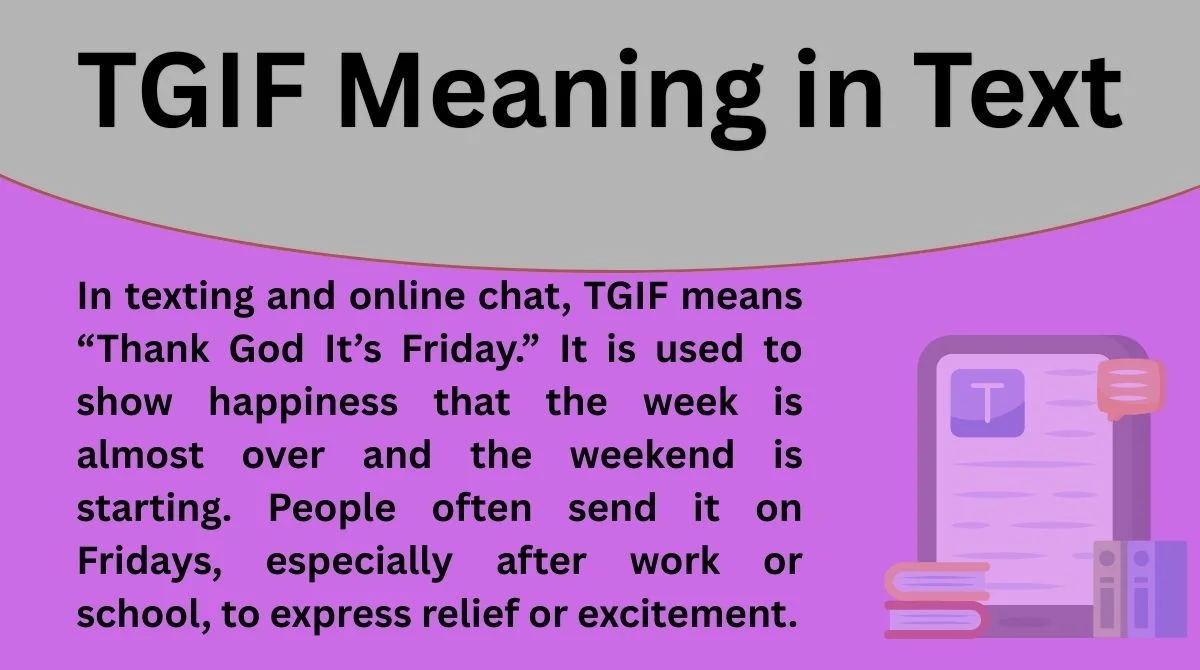
In texting and online chat, TGIF means “Thank God It’s Friday.” It is used to show happiness that the week is almost over and the weekend is starting. People often send it on Fridays, especially after work or school, to express relief or excitement.
The phrase carries a positive feeling. It can mean:
- “I’m tired but happy the week is done.”
- “Time to relax.”
- “Let’s make weekend plans.”
You do not need to be religious to use TGIF. Most people use it casually, just as an expression of joy. It works in both personal and professional messages, though it is more common with friends or coworkers in informal settings.
You might see TGIF:
- As a standalone message: “TGIF!!!”
- With emojis: “TGIF 😄🍕”
- In captions: “TGIF vibes.”
It can also appear sarcastically. For example, someone with weekend work might say TGIF ironically.
Quick examples:
- “TGIF! Finally done with exams.”
- “Long week… TGIF.”
- “TGIF 🎉 Any plans?”
The key idea is simple: Friday equals freedom.
Full Form, Stands For & Short Meaning of TGIF
The full form of TGIF is Thank God It’s Friday. The short meaning is: I’m happy it’s Friday because the weekend is coming.
This abbreviation belongs to a large group of internet slang words that make communication faster. Instead of typing a full sentence like “I’m glad the week is over,” people write TGIF.
Why people like short forms:
- Saves time typing
- Feels casual and friendly
- Creates shared culture online
TGIF is easy to understand because:
- T = Thank
- G = God
- I = It’s
- F = Friday
Even if someone writes it in lowercase (tgif), the meaning stays the same.
Sometimes people expand the meaning slightly depending on mood:
- “Thank goodness it’s Friday”
- “Time to get it fun”
- “Thank God I’m free”
But the original meaning remains the most common worldwide.
You may also see TGIF in:
- Office chats
- Student groups
- Social media captions
- Weekend memes
Internal linking suggestion: You could link this section to related abbreviation guides like “LOL meaning in text” or “BRB meaning in chat.”
Origin, History & First Known Use of TGIF
The phrase “Thank God It’s Friday” existed long before texting. It became popular in spoken English during the mid-20th century, especially in workplace culture. Employees often used it to celebrate the end of the workweek.
Over time, the phrase appeared in:
- Radio shows
- Restaurants and promotions
- Pop culture references
- Casual conversation
When texting and the internet grew in the 1990s and early 2000s, people shortened the phrase to TGIF. Abbreviations were common because early phones had small keyboards and character limits.
The internet helped TGIF spread globally. Now, people in many countries use it, even if English is not their first language.
Interesting facts:
- It became strongly tied to office culture.
- Memes helped it stay relevant.
- It is one of the oldest internet abbreviations still used today.
Today, TGIF is not just about work. Students, freelancers, and even parents use it to celebrate the weekend feeling.
How People Use TGIF in Daily Conversations
People use TGIF to express emotions, start conversations, or react to situations. It often appears when someone feels relief or excitement about upcoming free time.
Common situations:
- After a stressful week
- Before weekend plans
- At the end of school or work
- When chatting with friends on Friday
Tone variations:
- Excited: “TGIF!!! Party time 🎉”
- Relaxed: “TGIF. Movie night.”
- Funny: “TGIF… time to sleep all weekend 😴”
TGIF also works as:
- A conversation starter
- A mood update
- A caption for photos
Examples:
- “TGIF! Pizza tonight?”
- “It’s been rough. TGIF.”
- “Coffee + TGIF = happiness.”
Because it is positive, it usually creates friendly energy in conversations. People often respond with plans or agreement.
TGIF Meaning Across WhatsApp, Instagram, TikTok & Snapchat
The meaning of TGIF stays the same across platforms, but the style changes depending on the app culture.
On WhatsApp:
- Used in group chats with friends or coworkers
- Often followed by weekend plans
- Example: “TGIF guys! Dinner tonight?”
On Instagram:
- Used in captions and stories
- Often paired with lifestyle photos
- Example: “TGIF vibes ✨”
On TikTok:
- Appears in video captions or hashtags
- Used for funny or relatable content
- Example: “When you realize it’s Friday… #TGIF”
On Snapchat:
- Quick snaps showing mood or plans
- Often includes emojis or selfies
- Example: “TGIF 😎”
The core meaning never changes, but the tone depends on the platform.
Different Meanings of TGIF in Other Fields
Although TGIF usually means “Thank God It’s Friday,” it can have other meanings in specific contexts.
Possible alternate meanings:
- Business campaigns or promotions
- Event names
- Entertainment branding
- Casual slogans
For example:
- Companies may use TGIF for marketing events.
- Some communities use it for themed gatherings.
- It may appear in titles of shows or playlists.
However, in everyday texting, the Friday meaning is almost always correct. Context helps you know which meaning applies.
Common Confusions, Mistakes & Wrong Interpretations
Some people misunderstand TGIF, especially if they are new to texting slang.
Common mistakes:
- Thinking it means “Today God Is First”
- Confusing it with “TGI”
- Assuming it is only religious
Important clarifications:
- It is usually not religious.
- It always connects to Friday.
- It expresses emotion, not information.
Another confusion is timing. Sending TGIF on Monday may look sarcastic or humorous.
Wrong usage examples:
- “TGIF on Tuesday” (unless joking)
- Using it in serious business reports
Correct usage:
- Casual conversation
- Friendly office chats
- Social media captions
Similar Terms, Alternatives & Related Slang
Many slang phrases express the same feeling as TGIF.
Similar terms:
- “Finally Friday”
- “Fri-yay”
- “Weekend mode”
- “Time to relax”
- “Happy Friday”
Related abbreviations:
- TTYL (Talk To You Later)
- BRB (Be Right Back)
- LOL (Laugh Out Loud)
These alternatives help you vary your language while keeping the same mood.
Examples of TGIF in Real Chat Situations
Here are realistic chat examples:
- “TGIF! Want to grab burgers tonight? 🍔”
- “Long meetings all week… TGIF 😩”
- “TGIF 🎉 I’m going out.”
- “School done. TGIF 😎”
- “TGIF… sleep time.”
Work chat:
- “TGIF everyone! Great job this week.”
Funny:
- “TGIF. My couch missed me.”
These examples show how flexible the phrase is.
How to Reply When Someone Says TGIF
Responding to TGIF is easy. Match the mood.
Friendly replies:
- “Yes! Finally 😄”
- “Any plans?”
- “Same here!”
- “We survived the week!”
If you want to continue the conversation:
- Suggest activities
- Share your plans
- Agree with excitement
Examples:
- “TGIF!” → “Right? Movie night?”
- “TGIF 😴” → “You need rest!”
Is TGIF Still Popular? Trends & Online Usage
Yes, TGIF is still widely used. Even with new slang appearing daily, this abbreviation remains strong because it connects to a universal feeling.
Why it stays popular:
- Simple meaning
- Easy to type
- Relatable emotion
- Works across ages
Trends show:
- Frequent use in memes
- Hashtags on social media
- Workplace culture messages
Younger users may prefer “Fri-yay,” but TGIF is still recognized globally. It is considered classic internet slang that has not faded.
FAQs
1. What does TGIF stand for in texting?
It stands for “Thank God It’s Friday.”
2. Is TGIF religious?
Not usually. Most people use it casually to celebrate Friday.
3. Can I use TGIF at work?
Yes, in informal chats or friendly workplace messages.
4. What day should I send TGIF?
Friday. Other days are usually jokes or sarcasm.
5. Is TGIF outdated slang?
No. It is still widely used online and in conversations.
6. What emojis go well with TGIF?
🎉 😄 🍕 😎 🍻 are common choices.
Conclusion
TGIF is one of the simplest and most positive abbreviations in texting culture.
It means “Thank God It’s Friday,” and it expresses relief, happiness, and excitement for the weekend.
The phrase has existed for decades, but the internet helped it become a global slang term used across messages, captions, and memes.
Its popularity comes from a shared human experience—looking forward to rest and fun after a busy week.
Whether you use TGIF with friends, coworkers, or on social media, the message is always clear: the week is ending, and good times are ahead.
Understanding slang like this helps you communicate naturally and connect better with others online.
So next Friday, feel free to send a cheerful “TGIF!” and join the worldwide celebration of the weekend.

Freya Martin is a creative writer who loves playful wordplay, light humor, and engaging content for a global audience.