If you’ve spent time chatting online, gaming, or scrolling social media, you’ve likely seen the term STFU pop up in messages or comments.
Many people search for “stfu meaning in text” because they want to understand what it means, whether it’s rude, and how it should be used in conversations.
Internet slang changes fast, and abbreviations like this can feel confusing if you’re not familiar with them.
In simple terms, STFU is a short internet phrase people use to tell someone to stop talking.
However, the tone can vary a lot depending on context.
Sometimes it’s playful between friends, and other times it’s meant seriously or even aggressively.
This guide explains the full meaning, history, usage, examples, and how to respond when someone says STFU to you, all in a clear and friendly way.
What Does STFU Mean in Text & Chat?
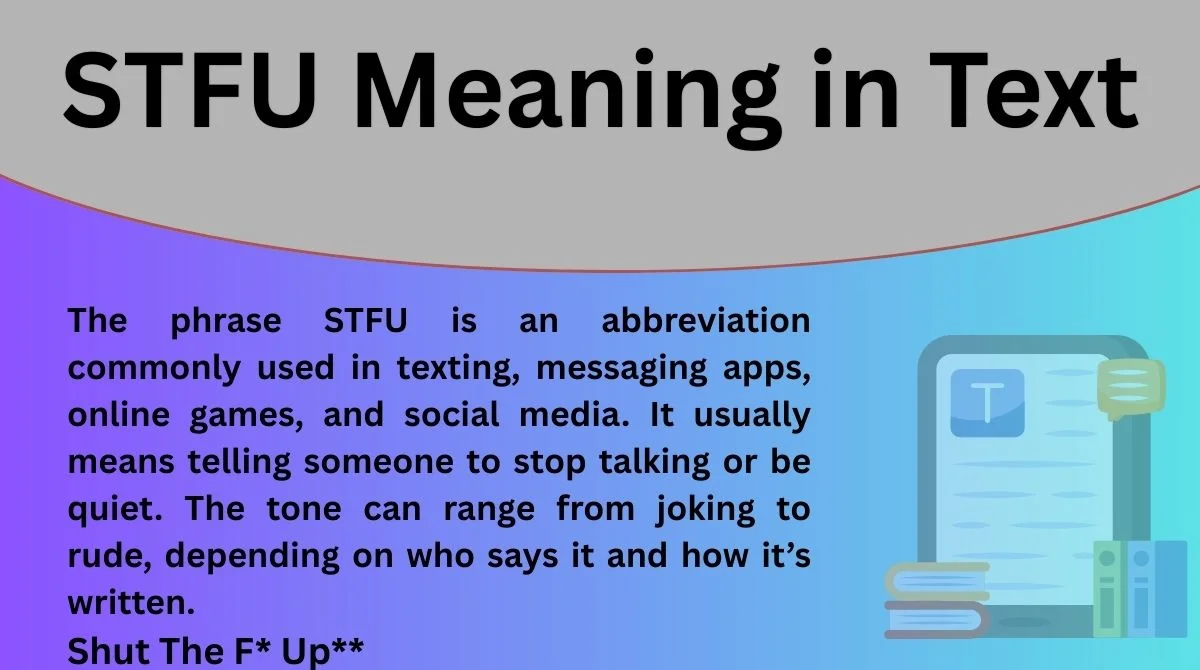
The phrase STFU is an abbreviation commonly used in texting, messaging apps, online games, and social media. It usually means telling someone to stop talking or be quiet. The tone can range from joking to rude, depending on who says it and how it’s written.
For example, friends might use it in a playful way:
- “STFU 😂 that story is chaotic!”
- “No way you met him. STFU!”
But in arguments, it can sound harsh:
- “Just STFU already.”
- “I’m tired of this. STFU.”
Because tone is hard to read in text, people sometimes misunderstand the intent. Emojis, punctuation, or context usually help show whether it’s friendly or serious.
In online culture, STFU is considered a strong slang expression, so it’s best used carefully. Many people avoid it in professional or formal conversations because it can sound disrespectful.
Full Form, Stands For & Short Meaning of STFU
The full form of STFU is:
Shut The F* Up**
The phrase replaces the middle word with the letter “F” to keep it shorter and less explicit. Even though it’s abbreviated, most people understand the meaning immediately.
Short meaning:
- Be quiet
- Stop talking
- I don’t believe you (playful use)
- Enough already
The meaning changes based on emotion:
Playful tone
- Surprise
- Excitement
- Shock
Negative tone
- Anger
- Frustration
- Annoyance
Because it includes a swear word, it’s considered informal slang and may offend some people.
Origin, History & First Known Use of STFU
The phrase behind STFU (“shut up”) has existed for centuries in spoken language. However, the abbreviated form STFU became popular with the rise of internet messaging in the late 1990s and early 2000s.
Early chat rooms, forums, and multiplayer games encouraged short typing to save time. Users began shortening common phrases into acronyms, creating terms like:
- LOL
- BRB
- OMG
- STFU
Gaming culture played a major role in spreading STFU because competitive environments often included trash talk or quick reactions. Later, social media platforms helped it become mainstream.
Today, STFU is widely recognized across many countries, even by people who don’t speak English as a first language. Its popularity continues because short slang fits fast communication habits.
How People Use STFU in Daily Conversations
People use STFU in different ways depending on mood, relationship, and context. Among close friends, it may show excitement rather than anger.
Common daily uses:
- Reacting to shocking news
- Joking with friends
- Expressing disbelief
- Showing frustration
- Ending arguments
Examples:
- “STFU, you won the lottery??”
- “Bro STFU that’s hilarious 😂”
- “Please STFU and listen for a second.”
The relationship between speakers matters most. Friends might laugh, but strangers could feel insulted. That’s why tone awareness is important when using slang like STFU.
STFU Meaning Across WhatsApp, Instagram, TikTok & Snapchat
The meaning stays mostly the same across platforms, but the tone can shift slightly depending on how people communicate there.
- Used in private chats
- Often playful between friends
- Emojis reduce harshness
- Seen in comments or DMs
- Often reaction to surprising posts
- Can appear rude in arguments
TikTok
- Used in captions or comments
- Usually humorous or dramatic reactions
- Popular with younger users
Snapchat
- Casual friend conversations
- Often joking tone
- Short messages fit the platform style
Platform culture influences how aggressive or friendly the phrase feels.
Different Meanings of STFU in Other Fields
While STFU mainly means “shut the f*** up,” in rare cases it can represent other phrases depending on context, especially in technical or niche communities.
Possible alternate meanings:
- Software Test Framework Utility (technical context)
- Students Task Force Unit (organizational use)
- Special Tactical Field Unit (fiction or gaming)
However, these meanings are uncommon. In everyday texting, people almost always mean the slang version.
Common Confusions, Mistakes & Wrong Interpretations
Some people misunderstand STFU because they assume it’s always angry or always joking. Both assumptions can be wrong.
Common mistakes:
- Thinking it’s polite slang
- Using it in professional messages
- Saying it to someone you don’t know well
- Missing sarcasm or humor
Tone indicators like emojis, capital letters, or punctuation help clarify intent:
- “STFU!!!” → More aggressive
- “stfu 😂” → Playful
Understanding context prevents unnecessary conflict.
Similar Terms, Alternatives & Related Slang
Many alternatives exist that are softer or less offensive.
Similar slang:
- STG (swear to God)
- OMG (oh my God)
- IDC (I don’t care)
Polite alternatives:
- Be quiet
- Calm down
- Stop talking for a second
- No way!
Funny alternatives:
- “Shush!”
- “Zip it 🤐”
- “No talking allowed 😂”
Choosing a softer phrase can avoid misunderstandings.
Examples of STFU in Real Chat Situations
Here are realistic examples to show tone differences:
Friendly
- “STFU you met your crush?? 😍”
- “STFU that’s the best news ever!”
Funny
- “STFU I’m dying laughing 😂”
- “Bro STFU you’re chaotic.”
Angry
- “Just STFU and listen.”
- “I said STFU.”
Disbelief
- “STFU… seriously??”
How to Reply When Someone Says STFU
Your response depends on tone and relationship.
If playful:
- “Haha I’m serious!”
- “I know right 😂”
- “Don’t tell me to STFU 😜”
If rude:
- “No need to be rude.”
- “Let’s talk calmly.”
- Ignore the message
If confusing:
- “Wait… joking or serious?”
Responding calmly often prevents escalation.
Is STFU Still Popular? Trends & Online Usage
Yes, STFU is still widely used in online communication. Short slang remains popular because people prefer quick typing and expressive reactions.
However, trends show some changes:
- Younger users prefer emojis or memes instead
- Some communities avoid aggressive language
- Casual slang continues growing on social media
STFU remains recognizable and commonly understood, even if usage style evolves over time.
FAQs
1. Is STFU rude?
Yes, it can be rude because it includes a swear word. Tone and relationship determine how offensive it feels.
2. Can STFU be friendly?
Among friends, it can be playful or show excitement, especially with emojis.
3. What does STFU mean from a girl or guy?
The meaning is the same regardless of gender. Context matters more than who says it.
4. Should I use STFU at work?
No. It’s informal and inappropriate for professional settings.
5. What is a polite way to say STFU?
You can say “please be quiet,” “hold on,” or “let me speak.”
Conclusion
Understanding the STFU meaning in text is simple once you know the context.
It stands for a strong phrase telling someone to be quiet, but tone can change from playful to offensive depending on the situation.
Friends often use it jokingly, while arguments can make it sound harsh.
Because it includes a swear word, it’s best avoided in formal conversations or with people you don’t know well.
Internet slang continues evolving, but STFU remains a widely recognized abbreviation across messaging apps and social media.
Knowing when and how to use it—or respond to it—helps you communicate more clearly online without misunderstandings.

Freya Martin is a creative writer who loves playful wordplay, light humor, and engaging content for a global audience.