If you’ve ever seen someone type “sn” in a text message or social media chat and paused to wonder what it means, you’re not alone.
The sn meaning in text is a surprisingly common search because this short abbreviation can mean different things depending on context, platform, and conversation tone.
From casual chats between friends to usernames on social media, “sn” pops up everywhere—often without explanation. That’s exactly why people look it up.
Understanding abbreviations like “sn” helps you avoid confusion, reply correctly, and stay fluent in modern digital communication.
In this guide, we’ll break down what “sn” means, where it comes from, how people use it today, and how its meaning changes across platforms like WhatsApp, Instagram, TikTok, and Snapchat—all in a clear, friendly way.
What Does SN Mean in Text & Chat?
In everyday texting and online chatting, SN is a flexible abbreviation with multiple meanings. The most common interpretation depends entirely on how it’s used within the sentence. Unlike fixed acronyms, “sn” adapts to context, which is why it often confuses readers.
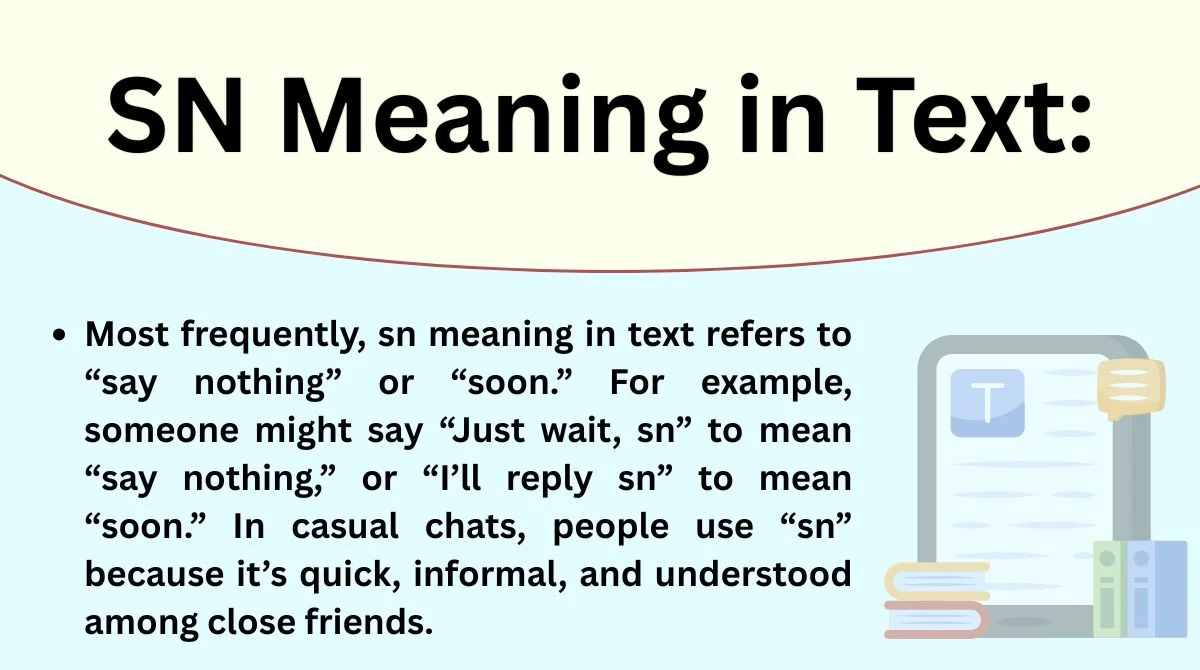
Most frequently, sn meaning in text refers to “say nothing” or “soon.” For example, someone might say “Just wait, sn” to mean “say nothing,” or “I’ll reply sn” to mean “soon.” In casual chats, people use “sn” because it’s quick, informal, and understood among close friends.
Another popular usage is “screen name,” especially when discussing usernames on apps or games. You might see messages like, “What’s your sn on Insta?” Here, “sn” clearly means a username rather than a response.
Because texting relies heavily on speed and shared understanding, people rarely explain abbreviations. That’s why misreading “sn” is common—especially if you’re new to online slang or chatting across generations.
Quick examples:
- “Don’t reply yet, sn.”
- “I’ll send the details sn.”
- “Drop your sn so I can add you.”
The key takeaway: always read the surrounding message to decode the correct meaning of “sn.”
Full Form, Stands For & Short Meaning of SN
One reason the sn meaning in text is tricky is because SN doesn’t have a single official full form. Instead, it has several commonly accepted expansions depending on context.
Here are the most widely used meanings:
- SN = Say Nothing
Used to suggest silence or secrecy in a conversation. - SN = Soon
A casual shorthand meaning “in a little while.” - SN = Screen Name
Refers to a username on social platforms or gaming apps. - SN = Surname
Occasionally used in forms or semi-formal chats.
Unlike traditional acronyms, “sn” is often written in lowercase, reinforcing its informal tone. People rarely capitalize it unless they’re using it in a technical or professional sense.
What makes “sn” unique is that it works as both a timing word (“soon”) and an instruction (“say nothing”). That dual use is why it remains popular in fast-paced chats.
If you’re unsure which meaning applies, look for clues:
- Timing-related sentence → soon
- Privacy or secrecy → say nothing
- Profiles or accounts → screen name
Understanding these short meanings makes online conversations smoother and less awkward.
Origin, History & First Known Use of SN
The origin of sn meaning in text can be traced back to early internet communication, when character limits and slow typing pushed users to shorten everything possible. During the late 1990s and early 2000s, chat rooms, forums, and SMS messaging encouraged abbreviations like “brb,” “lol,” and “sn.”
Initially, “sn” was most commonly used as “screen name.” Early messaging platforms required usernames, and people frequently asked for each other’s SNs to connect. As texting culture evolved, users began reusing short letter combinations for new meanings.
Over time, “sn” expanded into conversational shorthand like “soon” and “say nothing,” especially in private chats where context was shared. This evolution shows how digital language adapts naturally to user behavior rather than formal rules.
Unlike slang that fades quickly, “sn” survived because it stayed useful across platforms. Each new app—from SMS to social media—gave it fresh relevance. Its simplicity helped it persist while longer abbreviations disappeared.
Today, “sn” feels modern, but its roots are deeply tied to the earliest days of online interaction. It’s a great example of how internet language grows organically and continuously reshapes itself.
How People Use SN in Daily Conversations
In daily digital conversations, sn is used casually and efficiently. People rely on it when speed matters and when they expect the other person to understand the context without explanation.
You’ll often see “sn” in short replies, side comments, or private messages. It’s rarely used in formal writing but thrives in friendly chats, group conversations, and DMs.
Common daily uses include:
- Delaying a response: “I’ll answer sn.”
- Suggesting silence: “Sn about this, okay?”
- Asking for usernames: “What’s your sn?”
Because texting is conversational, people don’t stop to clarify abbreviations unless asked. That’s why “sn” works best among friends or peers who already share communication habits.
Tone matters too. When paired with emojis or casual language, “sn” feels relaxed and friendly. Without context, though, it can seem vague—so experienced texters often add a follow-up if there’s any chance of confusion.
In short, people use “sn” to save time, reduce typing, and keep conversations flowing naturally.
SN Meaning Across WhatsApp, Instagram, TikTok & Snapchat
The sn meaning in text shifts slightly depending on the platform you’re using. Each app has its own communication style, which influences how abbreviations are interpreted.
- WhatsApp:
“SN” usually means soon or say nothing, especially in private or group chats. - Instagram:
Most commonly refers to screen name, especially when sharing or asking for usernames. - TikTok:
Often used as screen name in comments or DMs when people want to follow each other. - Snapchat:
“SN” almost always means Snap Name or screen name, since usernames are central to the app.
Platform context is crucial. If you see “sn” on Snapchat, it’s almost never about timing or silence—it’s about identity. On messaging apps, however, the conversational meaning dominates.
Understanding these differences helps you reply correctly and avoid awkward misunderstandings.
Different Meanings of SN in Other Fields
Outside casual texting, SN can mean very different things. This adds another layer of confusion for people encountering it online.
In technical or professional fields, SN may stand for:
- Serial Number (electronics, products)
- Subnetwork (Subnet) in networking
- Scientific Notation in math
- Social Network in academic writing
These meanings are rarely used in casual chats but may appear in work messages or educational contexts. That’s why it’s important not to assume the texting meaning if the conversation is technical.
Always match the meaning of “sn” to the topic being discussed.
Common Confusions, Mistakes & Wrong Interpretations
The biggest mistake people make with sn meaning in text is assuming it has only one definition. Misreading it can lead to awkward replies or missed signals.
Common errors include:
- Thinking “sn” always means “soon”
- Confusing “screen name” with “say nothing”
- Using “sn” in formal messages where it feels unclear
If you’re unsure, it’s perfectly fine to ask for clarification. A simple “What do you mean by sn?” avoids confusion and keeps communication clear.
Similar Terms, Alternatives & Related Slang
If “sn” feels unclear, people often use alternatives that are more direct.
Related slang and abbreviations include:
- BRB – Be right back
- IDK – I don’t know
- DM – Direct message
- UN – Username
Examples of SN in Real Chat Situations
Here are quick, realistic chat examples:
- “I can’t talk rn, sn 🤫”
- “Send me your sn so I can follow you 😊”
- “I’ll explain everything sn 👍”
- “Sn about this, trust me.”
These examples show how tone and context shape meaning.
How to Reply When Someone Says SN
Your reply should match the intended meaning.
- If it means soon:
“Okay, no rush!” - If it means say nothing:
“Got it 🤐” - If it means screen name:
“Sure! It’s @example.”
When in doubt, ask politely for clarification.
Is SN Still Popular? Trends & Online Usage
Yes—sn is still widely used, especially on social media and messaging apps. While newer slang appears constantly, short abbreviations like “sn” remain useful because they’re fast and flexible.
Its popularity hasn’t exploded, but it hasn’t disappeared either. Instead, it’s become a steady, background term in digital language—especially among younger users and frequent texters.
FAQs
1. What does sn usually mean in texting?
Most often, it means soon or say nothing, depending on context.
2. Does sn mean screen name?
Yes, especially on Instagram, TikTok, and Snapchat.
3. Is sn formal or informal?
It’s informal and best used in casual chats.
4. Can sn have more than one meaning?
Absolutely. Context determines its meaning.
5. Is sn still commonly used today?
Yes, particularly in social media and private messaging.
Conclusion
The sn meaning in text isn’t complicated once you understand how flexible online language can be.
Depending on context, “sn” can mean soon, say nothing, or screen name—and each meaning fits naturally into modern digital conversations.
Its long history in online communication explains why it still shows up across platforms like WhatsApp, Instagram, TikTok, and Snapchat.
The key is always context: who’s speaking, where the message appears, and what the conversation is about.
By learning how “sn” works, you’ll read messages more accurately, reply with confidence, and avoid common misunderstandings.
As digital language keeps evolving, abbreviations like “sn” remind us that clarity and context matter more than the letters themselves.

Freya Martin is a creative writer who loves playful wordplay, light humor, and engaging content for a global audience.