If you’ve ever seen “SMH” in a message or comment and wondered what it means, you’re not alone.
Short forms like this appear everywhere—texts, social media posts, memes, and group chats.
People search for “smh meaning in text” because the phrase looks simple, yet its tone can change depending on the situation.
It can show disappointment, disbelief, or mild frustration without writing a full sentence.
In today’s fast-paced digital world, abbreviations save time and add emotion to conversations.
Understanding them helps you stay connected, especially with younger audiences and online culture.
This guide explains the meaning of SMH, where it came from, how people use it daily, and how you should reply when someone sends it to you.
By the end, you’ll know exactly when to use SMH—and when not to.
What Does SMH Mean in Text & Chat?
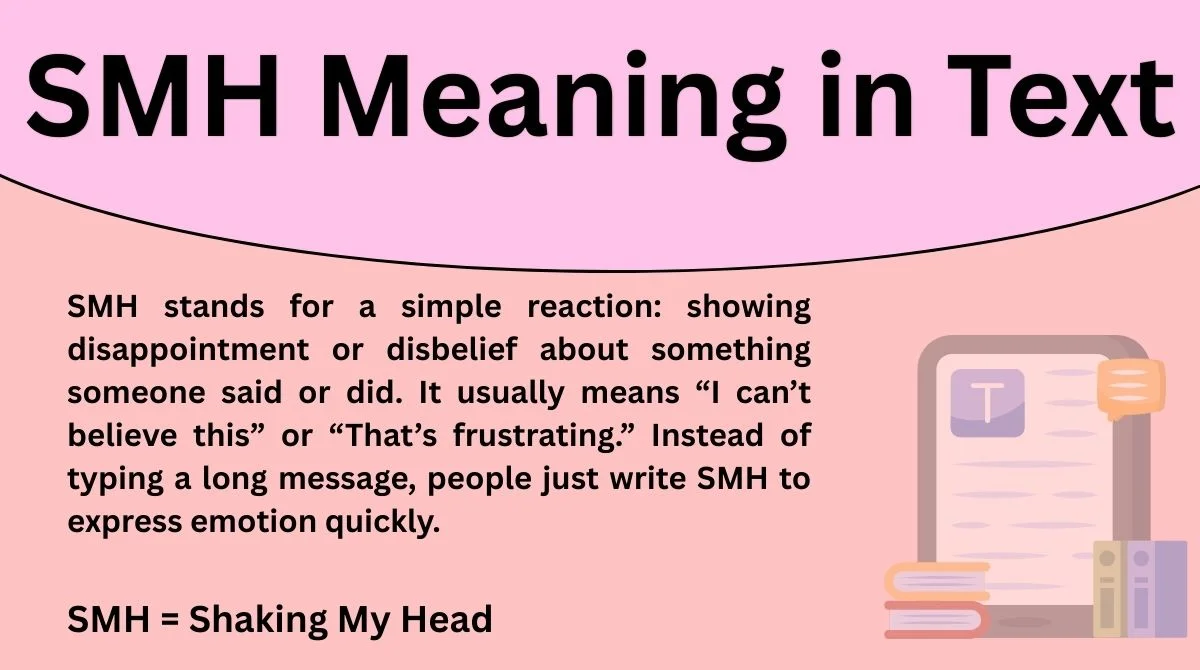
SMH stands for a simple reaction: showing disappointment or disbelief about something someone said or did. It usually means “I can’t believe this” or “That’s frustrating.” Instead of typing a long message, people just write SMH to express emotion quickly.
The tone depends on context. Sometimes it’s serious, and sometimes it’s playful sarcasm. For example, if a friend forgets your birthday, SMH may show real disappointment. But if someone says pineapple belongs on pizza, SMH might be used jokingly.
Common feelings behind SMH:
- Disappointment
- Frustration
- Disbelief
- Mild annoyance
- Sarcastic humor
It works like a digital body language cue. In real life, someone might shake their head. In text, they type SMH instead.
Quick examples:
- “You forgot your keys again? SMH.”
- “He thinks 2+2=5… SMH 😂”
- “SMH, this traffic is terrible.”
Because it’s short and expressive, SMH became popular across many platforms. It is easy to type and easy to understand once you know the meaning.
Full Form, Stands For & Short Meaning of SMH
The full form of SMH is:
SMH = Shaking My Head
This phrase comes from a physical action. When people shake their heads, they usually show disapproval, disbelief, or disappointment. The abbreviation simply turns that gesture into text form.
Short meaning:
- “I’m disappointed.”
- “That makes no sense.”
- “Wow, really?”
- “I can’t believe this.”
Some variations also exist:
- SMFH — Shaking My Freaking Head (stronger emotion)
- SMGDH — Shaking My God Damn Head (very intense reaction)
Most of the time, people stick with SMH because it’s simple and widely understood.
Why people use abbreviations like SMH:
- Faster typing
- Emotional expression
- Casual tone
- Internet culture trends
If you’re writing formal emails or professional messages, avoid SMH. It is best for casual conversations with friends, family, or online communities.
Origin, History & First Known Use of SMH
SMH started in early internet culture, especially in chat rooms and online forums during the late 1990s and early 2000s. As texting became more common, people looked for ways to express reactions quickly. Abbreviations like LOL, BRB, and OMG appeared around the same time.
The growth of smartphones and social media made SMH more popular. Platforms like Twitter (now X), Facebook, and messaging apps encouraged short communication. Character limits also pushed users toward abbreviations.
By the 2010s, SMH became mainstream slang. It appeared in memes, captions, and everyday texting. Younger users adopted it quickly, but older generations later learned it through exposure.
Reasons for its popularity:
- Easy to type
- Clear emotional meaning
- Works in many situations
- Fits meme culture
Today, SMH is recognized globally. Even people who don’t use slang often understand it when they see it online.
How People Use SMH in Daily Conversations
SMH is usually placed at the beginning or end of a sentence. It works like a reaction word rather than a full statement.
Common daily uses:
- Reacting to mistakes
- Responding to shocking news
- Showing disappointment in someone
- Expressing playful sarcasm
Examples:
- “SMH, you didn’t study for the exam?”
- “You ate my fries? SMH.”
- “SMH at myself for waking up late.”
Sometimes people use SMH alone without extra words. The meaning still comes through based on context.
Tone matters a lot. With close friends, it may sound funny. With strangers, it could feel rude. Always consider your relationship with the person before using it.
SMH Meaning Across WhatsApp, Instagram, TikTok & Snapchat
The meaning stays the same across platforms, but the style changes slightly.
- Used in private chats or family groups.
- Often shows mild frustration.
- Example: “You forgot to call me, SMH.”
- Appears in captions or comments.
- Can react to trends or memes.
- Example: “People still do this? SMH.”
TikTok
- Often sarcastic or humorous.
- Used with trending videos.
- Example: “SMH, why would you try that 😂”
Snapchat
- Casual and quick reactions.
- Sometimes sent alone as a reply.
- Example: “SMH 😭”
On visual platforms, emojis often appear with SMH to add tone.
Different Meanings of SMH in Other Fields
Although “Shaking My Head” is the most common meaning, SMH can represent different phrases in professional or technical contexts.
Possible alternate meanings:
- Sydney Morning Herald (news publication)
- So Much Hate (rare slang variation)
- Smart Manufacturing Hub (industry term)
- Structural Mechanics Handbook (engineering)
Context decides the meaning. In everyday texting, people almost always mean “Shaking My Head.”
Common Confusions, Mistakes & Wrong Interpretations
Many beginners misunderstand SMH because the letters don’t clearly show the phrase.
Common mistakes:
- Thinking SMH means “So Much Hate”
- Confusing it with “SMT” or “SMB”
- Using it in formal writing
- Assuming it is always rude
Truth: SMH is not always negative. Sometimes it’s playful or joking.
Tip: If you’re unsure, look at the full conversation. Context will tell you the tone.
Similar Terms, Alternatives & Related Slang
If you want to express the same feeling, you can use other slang terms.
Popular alternatives:
- Facepalm
- OMG
- Seriously?
- Wow
- I can’t even
- Bruh
- Sigh
Examples of SMH in Real Chat Situations
Here are realistic examples:
- “You lost your phone again? SMH 😂”
- “SMH, I trusted you with the snacks.”
- “He said the Earth is flat… SMH.”
- “SMH at this weather.”
- “You watched the show without me? SMH 😭”
These examples show how flexible the abbreviation is.
How to Reply When Someone Says SMH
Your reply depends on why they used it.
If they’re disappointed:
- “Sorry 😅 my bad.”
- “I’ll fix it, promise.”
If they’re joking:
- “Hey, don’t judge me 😂”
- “You know you love me.”
If they’re frustrated:
- “Yeah, it’s annoying.”
- “I understand.”
Simple rule: match their tone.
Is SMH Still Popular? Trends & Online Usage
Yes, SMH is still widely used. While new slang appears every year, SMH remains common because it’s simple and clear.
Trends show:
- Continued use in memes
- Frequent appearance in comments
- Popular among Gen Z and millennials
- Recognized by older users too
Some newer expressions compete with it, but SMH hasn’t disappeared. It’s now part of core internet language.
FAQs
1. What does SMH mean in texting?
It means “Shaking My Head,” showing disappointment or disbelief.
2. Is SMH rude?
Not always. It depends on tone and context.
3. Can SMH be used professionally?
No. It’s best for casual conversations only.
4. What is the difference between SMH and SMFH?
SMFH is a stronger, more emotional version.
5. Do people still use SMH in 2026?
Yes. It remains popular across social media and texting.
6. Can SMH be positive?
Usually no, but it can be playful or sarcastic among friends.
Conclusion
Understanding the SMH meaning in text helps you navigate modern communication with confidence.
The abbreviation stands for “Shaking My Head,” and it expresses disappointment, disbelief, or mild frustration in a quick, casual way.
Its popularity grew from early internet culture and continues today across messaging apps and social media platforms.
The key to using SMH correctly is context. With friends, it can be funny or sarcastic.
In serious situations, it may show real disappointment.
Knowing how to respond when someone sends SMH also improves your communication skills.
As online language keeps evolving, SMH remains one of the most recognizable and useful slang terms.
Now that you understand it fully, you can use it naturally in your own conversations.

Freya Martin is a creative writer who loves playful wordplay, light humor, and engaging content for a global audience.