If you’ve been scrolling through texts, Instagram captions, or TikTok comments, you might have stumbled upon the abbreviation PSA and wondered what it means.
🤔 While it’s commonly seen online, not everyone knows its origin or the proper context for using it.
Understanding PSA meaning in text is essential because misinterpreting it can lead to confusion in casual chats or social media conversations.
People often search for this term to stay updated with online slang, avoid awkward moments, and communicate effectively with friends or followers.
In this guide, we’ll explore PSA in detail, from its full form to real-world examples and online usage trends, helping you use it confidently in everyday conversations.
What Does PSA Mean in Text & Chat?
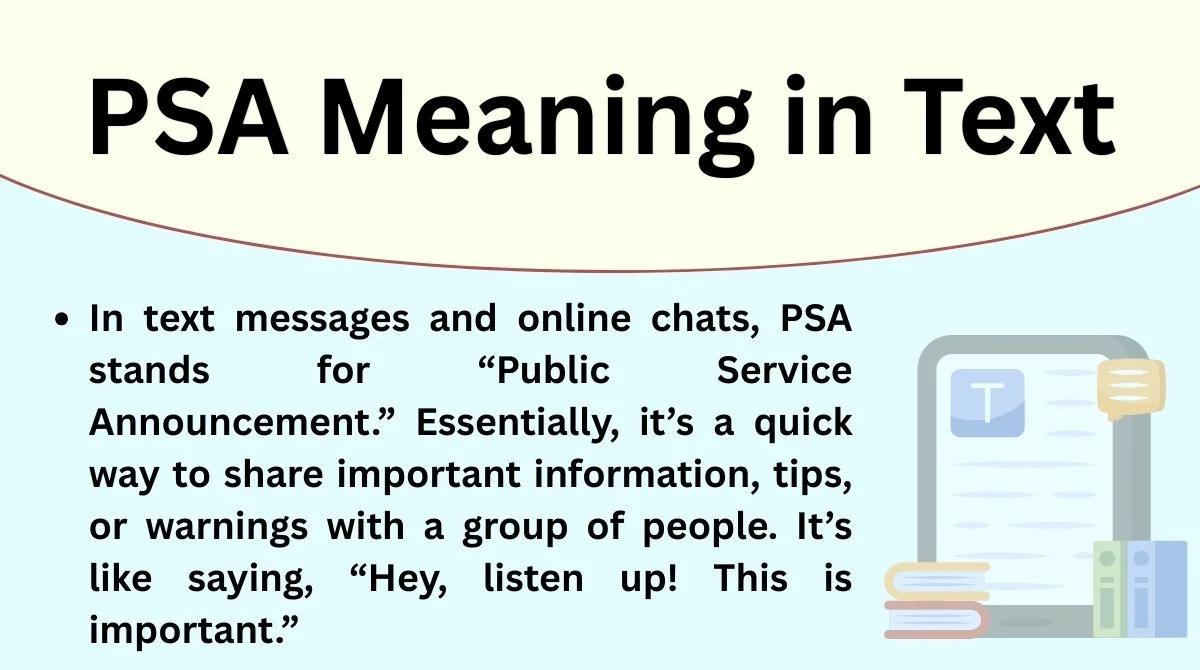
In text messages and online chats, PSA stands for “Public Service Announcement.” Essentially, it’s a quick way to share important information, tips, or warnings with a group of people. It’s like saying, “Hey, listen up! This is important.”
For example:
- “PSA: Don’t forget to lock your doors tonight! 🔒”
- “PSA: The new app update is causing crashes. Avoid updating for now.”
In chat or casual texting, PSA is often used humorously or seriously, depending on the context. It’s a versatile abbreviation that helps people get attention quickly without writing long sentences.
Full Form, Stands For & Short Meaning of PSA
- Full Form: Public Service Announcement
- Short Meaning: A message meant to inform, warn, or guide people
- Purpose in Texting: To give quick, important information
It’s a simple, convenient way to communicate alerts or advice. The term is widely understood on platforms like WhatsApp, Instagram, TikTok, and Snapchat, making it a popular choice for online messaging.
Origin, History & First Known Use of PSA
The term Public Service Announcement originated in the early 20th century, primarily used in radio and television broadcasts to share important information with the public. Initially, it was a formal communication tool for government or nonprofit organizations.
With the rise of the internet and texting culture, PSA migrated to social media and chat platforms. Today, it’s often casual, humorous, or informative in nature. Despite its formal origins, modern use leans heavily toward quick online communication rather than official broadcasts.
How People Use PSA in Daily Conversations
People use PSA to grab attention or highlight important tips in everyday conversations. Here’s how:
- Alerting friends: “PSA: Don’t skip breakfast; it actually matters! 🥣”
- Warning about scams: “PSA: That email isn’t legit, don’t click it.”
- Sharing tips: “PSA: Always save your work before a Zoom call!”
- Humor or memes: “PSA: Mondays are basically a free trial of chaos. 😅”
Using PSA adds a punch to your message, making it stand out in long chat threads or social feeds.
PSA Meaning Across WhatsApp, Instagram, TikTok & Snapchat
- WhatsApp: Mostly used in group chats to give reminders or advice
- Instagram: Appears in captions or Stories to share tips or warnings
- TikTok: Popular in video captions or duets for humorous or trending info
- Snapchat: Used in quick snaps or text overlays to share alerts with friends
Across platforms, PSA is versatile—it can be serious, funny, or purely informative depending on the tone.
Different Meanings of PSA in Other Fields
While texting uses PSA as “Public Service Announcement,” it has other meanings in different fields:
- Medical: Prostate-Specific Antigen (a protein measured in blood tests)
- Business: Professional Services Automation (software for managing services)
- Sports/Collectibles: Professional Sports Authenticator (grading collectibles)
Context is key! In casual text, it’s almost always “Public Service Announcement,” but be mindful if chatting about medicine, work, or collectibles.
Common Confusions, Mistakes & Wrong Interpretations
- Mistaking PSA for casual slang unrelated to announcements
- Confusing PSA with other abbreviations like P.S. (Postscript)
- Using PSA in serious professional emails incorrectly (it’s casual online)
Tip: If in doubt, read the conversation context carefully before using or interpreting PSA.
Similar Terms, Alternatives & Related Slang
- FYI (For Your Information): Less urgent than PSA
- Heads up: Informal way to alert someone
- Alert: Direct warning or notice
- Tip: Quick advice
Each has a slightly different tone—PSA is attention-grabbing and works for both serious and humorous messages.
Examples of PSA in Real Chat Situations
- “PSA: Remember to drink water! 💧”
- “PSA: Don’t reply to that spam message, it’s a scam!”
- “PSA: Our meeting got rescheduled to 3 PM.”
- “PSA: The Wi-Fi is down, don’t panic. 😅”
How to Reply When Someone Says PSA
- “Thanks for the heads-up!”
- “Noted 👍”
- “😂 Good tip!”
- “I’ll keep that in mind!”
The response usually depends on whether the PSA is serious or humorous.
Is PSA Still Popular? Trends & Online Usage
Yes! PSA remains widely used in 2026, especially on platforms like TikTok, Instagram, and WhatsApp. Its mix of humor and usefulness keeps it relevant in memes, trending advice, and group chats. People continue to use it as a quick way to share information without long explanations.
FAQs
Q1: Is PSA only used online?
No, it started in traditional media but is now common online and in text chats.
Q2: Can PSA be humorous?
Absolutely! Many PSAs online are jokes or memes.
Q3: What’s the difference between PSA and FYI?
PSA is more urgent or attention-grabbing; FYI is casual.
Q4: Should I use PSA in professional emails?
It’s better suited for casual communication, not formal emails.
Q5: Can PSA have other meanings?
Yes—medical, business, or collectibles—but in text, it usually means Public Service Announcement.
Conclusion
In short, PSA meaning in text is all about sharing important information quickly and effectively.
Whether it’s a friendly tip, a warning, or just a humorous notice, PSA helps you communicate clearly in online chats and social media.
From WhatsApp groups to TikTok captions, it’s a versatile abbreviation that keeps conversations sharp and engaging.
Knowing how and when to use PSA ensures you stay up-to-date with online slang and avoid any misunderstandings.
Next time you see a PSA, you’ll know exactly what it means—and how to reply!

Freya Martin is a creative writer who loves playful wordplay, light humor, and engaging content for a global audience.