If you’ve been scrolling through texts, social media, or chat apps, you might have stumbled upon “MW” and wondered, “What does MW mean in text?” 🤔 In today’s fast-paced digital conversations, abbreviations and slang are everywhere, making chatting faster but sometimes confusing.
People search for MW meaning because they want to stay updated with online lingo and avoid misunderstandings.
This guide will break down everything about MW, from its common uses in texting and social media to its origins, examples, and how to respond when someone sends it.
Whether you’re a teen, a social media enthusiast, or just trying to keep up with online conversations, this article will make MW crystal clear.
What Does MW Mean in Text & Chat?
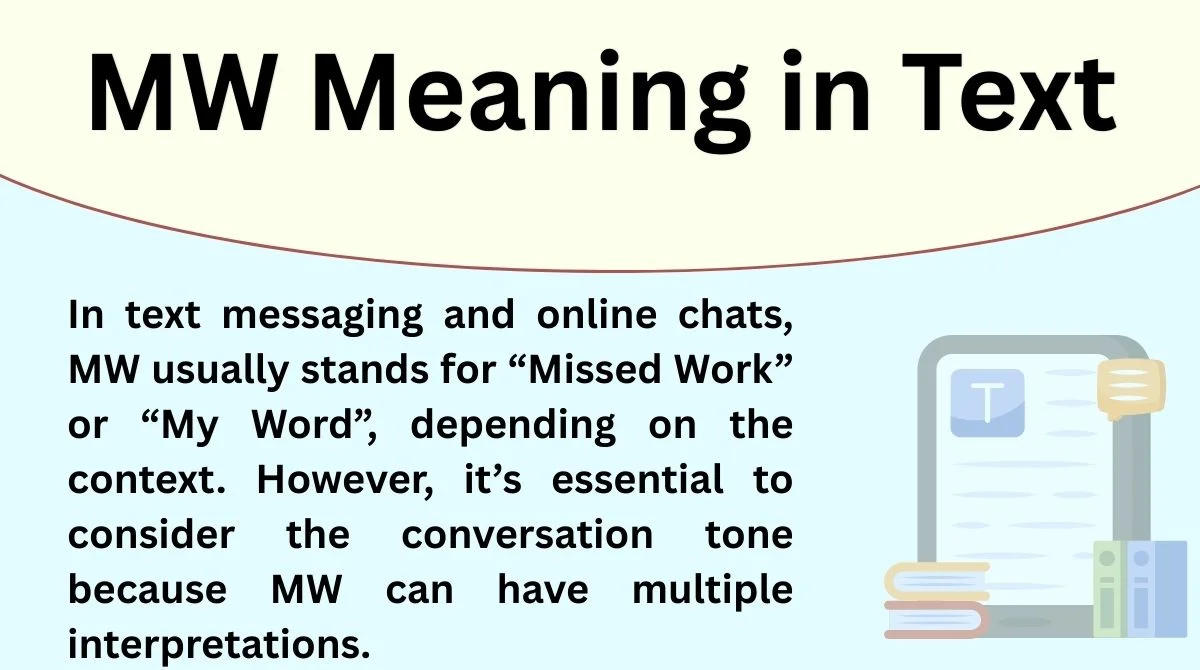
In text messaging and online chats, MW usually stands for “Missed Work” or “My Word”, depending on the context. However, it’s essential to consider the conversation tone because MW can have multiple interpretations.
- My Word: Used to express surprise or emphasis.
- Missed Work: Often used in professional or school-related messages.
- Medium Wave: In rare cases, people refer to radio frequencies, though not common in casual chat.
Understanding the context is key because the meaning changes based on the platform, relationship, or conversation style.
Full Form, Stands For & Short Meaning of MW
Here’s a quick breakdown:
| Abbreviation | Full Form | Short Meaning |
|---|---|---|
| MW | My Word | Expression of surprise, shock, or emphasis |
| MW | Missed Work | Refers to days or tasks not completed |
| MW | Medium Wave | Radio frequency band (technical usage) |
So next time you see MW in a chat, think about whether the person is joking, being dramatic, or talking about actual work! 😅
Origin, History & First Known Use of MW
The abbreviation MW originated in early online chatrooms and text messaging in the 2000s when users sought quick ways to express emotions or shorten common phrases.
- “My Word” has roots in English literature as an exclamation dating back centuries, used to express astonishment.
- “Missed Work” likely became popular in school or office texts around 2010, when students and employees started texting about absences.
- Digital adoption of MW spread through platforms like WhatsApp, Twitter, and forums where brevity is valued.
In essence, MW reflects how language evolves in the digital era—fast, fun, and often context-dependent.
How People Use MW in Daily Conversations
People use MW in texts and chats for different purposes:
- Expressing surprise or shock: “MW! I can’t believe you did that 😲”
- Talking about work/school: “I had 2 MWs last week 😩”
- Playful exaggeration: “MW, that cake looks amazing! 🍰”
It’s common in both casual and semi-professional texting. Using MW correctly makes your messages concise and relatable.
MW Meaning Across WhatsApp, Instagram, TikTok & Snapchat
MW’s meaning can vary across platforms:
- WhatsApp: Mostly “Missed Work” or “My Word” in personal chats.
- Instagram: Used in comments or captions for dramatic effect (“MW, can’t believe this view! 🌅”).
- TikTok: Often paired with video reactions, expressing shock or awe.
- Snapchat: Quick messages use MW for emphasis, usually “My Word.”
Each platform slightly shifts MW’s tone—from formal to fun and dramatic.
Different Meanings of MW in Other Fields
MW isn’t just online slang. It has specialized meanings in other areas:
- Science & Technology: MW = Megawatt, a unit of power.
- Radio: Medium Wave frequency band.
- Gaming: Sometimes short for “Modern Warfare,” especially in Call of Duty communities.
Always pay attention to context to avoid confusion!
Common Confusions, Mistakes & Wrong Interpretations
- Confusing MW with “Minimum Wage” in professional conversations.
- Mistaking MW for “Modern Warfare” in casual texts when it’s meant as “My Word.”
- Using it in formal emails or documents, where abbreviations can appear unprofessional.
Tip: When unsure, clarify! You can always ask, “Do you mean MW as in ‘My Word’?”
Similar Terms, Alternatives & Related Slang
- OMG – “Oh my God” (expresses shock like MW)
- LOL – Laughing out loud
- FWIW – For what it’s worth
- BRB – Be right back
These abbreviations are context-driven and often used interchangeably with MW depending on tone.
Examples of MW in Real Chat Situations
- “MW! That dress is stunning 😍”
- “I had 3 MWs this week, so tired 😩”
- “MW, you aced that test! 🎉”
These examples show how flexible MW is and how it adds personality to texts.
How to Reply When Someone Says MW
- Respond with agreement: “Right?? 😱”
- Show shared shock: “MW, I can’t even!”
- Playful reply: “MW indeed! 😂”
The key is matching the tone—serious, surprised, or playful.
Is MW Still Popular? Trends & Online Usage
MW is still used, but mostly among younger generations or in casual messaging. On TikTok, Instagram, and WhatsApp, it appears occasionally but is less common than terms like OMG or LOL. Its simplicity makes it stick around for niche use, especially in short reactions or quick chats.
FAQs
Q1: What does MW stand for in texting?
A: Most commonly “My Word” or “Missed Work,” depending on context.
Q2: Is MW used on social media?
A: Yes, it’s used on WhatsApp, Instagram, TikTok, and Snapchat to express surprise or talk about work.
Q3: Can MW mean Modern Warfare?
A: In gaming communities, yes, especially on platforms like Twitter or Discord.
Q4: How do I reply to MW in a chat?
A: You can respond with “Right?? 😲” or “MW indeed! 😂” to match the tone.
Q5: Is MW formal or casual?
A: It’s casual and best used in texting or informal online chats, not professional emails.
Conclusion
In short, MW in text is a versatile abbreviation that can mean “My Word,” “Missed Work,” or even “Medium Wave,” depending on context.
Its charm lies in its brevity and flexibility, allowing users to express surprise, report missed tasks, or add drama to conversations.
While it’s more common in casual chats and social media, understanding MW helps you stay in sync with online slang and communicate effectively.
Next time you see MW, you’ll know exactly how to respond and even impress your friends with your texting savvy.
Freya Martin is a creative writer who loves playful wordplay, light humor, and engaging content for a global audience.