Have you ever received a message on your iPhone and paused, wondering, “What does this even mean?” With texting becoming the primary way we communicate, it’s no surprise that shorthand, slang, and emojis are everywhere.
People often search for the “meaning in iPhone texts” to understand phrases, abbreviations, and subtle cues their friends or colleagues send.
Whether it’s a cryptic acronym like “SMH” or a playful emoji combination, understanding these texts can prevent misunderstandings and keep conversations smooth.
In this guide, we’ll break down popular terms, explain their origins, show how they’re used across platforms, and even give you tips on how to reply like a pro.
What Does [WORD] Mean in Text & Chat?
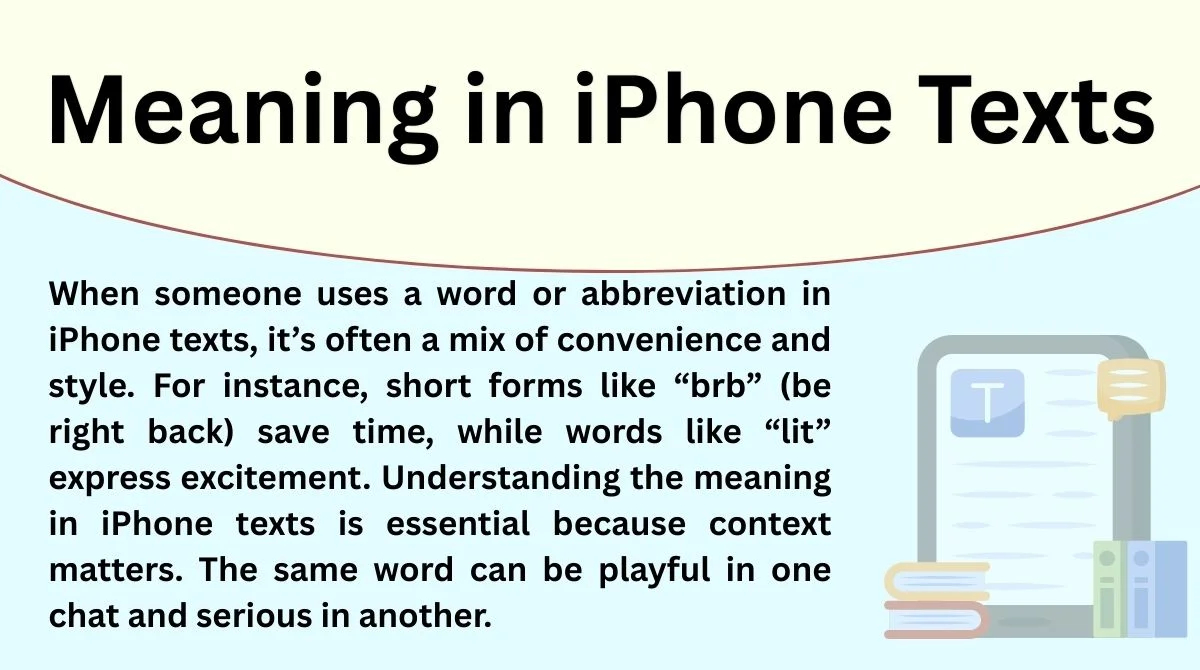
When someone uses a word or abbreviation in iPhone texts, it’s often a mix of convenience and style. For instance, short forms like “brb” (be right back) save time, while words like “lit” express excitement. Understanding the meaning in iPhone texts is essential because context matters. The same word can be playful in one chat and serious in another. By knowing the definition, you can read the tone, respond appropriately, and even join the conversation confidently without feeling out of the loop.
Quick examples:
- “That party was lit 🔥” → awesome, exciting
- “brb, need to grab lunch” → be right back
- “SMH, I can’t believe this” → shaking my head
Full Form, Stands For & Short Meaning of [WORD]
Many iPhone text terms are abbreviations. Understanding their full form helps avoid misinterpretations. For example:
| Abbreviation | Full Form | Meaning in Chat |
|---|---|---|
| LOL | Laugh Out Loud | Expressing amusement |
| FOMO | Fear of Missing Out | Anxiety about missing events |
| TTYL | Talk To You Later | Signing off politely |
Using these short forms keeps texting fast and casual while still conveying emotion and intent. Remember, sometimes people invent new slang, so staying updated is key.
Origin, History & First Known Use of [WORD]
Most modern texting words have fascinating histories. Many originate from early internet chat rooms, SMS limitations, or social media trends. For example:
- LOL first appeared in the 1980s in online forums.
- BRB became popular with mobile texting in the early 2000s.
- Words like sus (suspicious) exploded from gaming communities like Among Us before becoming mainstream.
Knowing the origin gives a deeper appreciation of why people use these words and how their meanings evolve.
How People Use [WORD] in Daily Conversations
In everyday texting, people use iPhone words to:
- Save time typing long messages.
- Express emotions quickly (😂, 😭, ❤️).
- Stay trendy or “in the know.”
Example chat:
- Friend 1: “I just aced my test!”
- Friend 2: “OMG 😱 congrats! So proud of you!”
Here, “OMG” (Oh My God) and the emoji show excitement and enthusiasm without long paragraphs.
[WORD] Meaning Across WhatsApp, Instagram, TikTok & Snapchat
Some words shift meaning depending on the platform. For example:
- Snapchat: Short-lived messages often use playful slang.
- Instagram: Abbreviations often accompany captions or comments.
- TikTok: New slang trends emerge here faster than anywhere else.
- WhatsApp: Conversations tend to mix formal and informal abbreviations depending on the recipient.
Being platform-aware ensures your texts are understood correctly.
Different Meanings of [WORD] in Other Fields
Many texting terms have alternative meanings outside of casual chat:
- DM → Direct Message (chat) or Doctor of Medicine (professional title)
- GOAT → Greatest Of All Time (text) or actual animal in farming contexts
- Flex → Show off (slang) or muscle movement (fitness context)
Always consider the context before assuming meaning.
Common Confusions, Mistakes & Wrong Interpretations
Misreading iPhone text terms is common. For instance:
- AF → means “as f***” in slang, but some think it’s harmless.
- IKR → “I know, right?” often confused with “I like reading.”
- Emojis can drastically change meaning depending on placement.
Always double-check if a message seems unclear before replying.
Similar Terms, Alternatives & Related Slang
Many words have equivalents or slightly different versions:
- LOL → LMAO, ROFL
- BRB → GTG, BBL
- Sus → Sketchy, Shady
Using alternatives keeps your texting style fresh and adaptable.
Examples of [WORD] in Real Chat Situations
- “Can’t wait for the concert! 🎶” → “Same here! It’s gonna be lit 😎”
- “I missed the movie 😩” → “FOMO much?”
- “That joke was hilarious 😂😂” → “LOL, I’m dying!”
How to Reply When Someone Says [WORD]
Knowing how to respond shows your texting fluency:
- LOL → “Haha, right?”
- BRB → “No rush!”
- SMH → “I know, confused!”
Context, tone, and emojis matter just as much as words.
Is [WORD] Still Popular? Trends & Online Usage
Texting slang is constantly evolving. Some words remain timeless (LOL, BRB), while others fade quickly (YOLO, bae). Tracking trends on TikTok, Instagram, and Twitter can keep you updated and help avoid outdated slang in texts.
FAQs
Q1: What does “LOL” mean in iPhone texts?
A1: Laugh Out Loud; used to show amusement.
Q2: Are iPhone text abbreviations universal?
A2: Mostly, but some are platform- or region-specific.
Q3: Can emojis change a word’s meaning?
A3: Yes! Emojis add context and emotion to text.
Q4: How do I know when slang is outdated?
A4: Check social media trends and popular apps like TikTok.
Q5: Is it okay to use formal language in iPhone texts?
A5: Absolutely, depending on the recipient and context.
Conclusion
Understanding the meaning in iPhone texts is more than decoding abbreviations—it’s about connecting, expressing emotion, and staying in tune with evolving digital culture.
By learning common terms, their origins, and how they’re used across platforms, you can text confidently and avoid misunderstandings.
Whether it’s casual chat, social media, or professional messages, mastering texting slang keeps you fluent in today’s fast-paced conversations.
So next time you see a cryptic acronym or emoji combo, you’ll know exactly how to respond—and maybe even impress your friends with your texting skills!

Freya Martin is a creative writer who loves playful wordplay, light humor, and engaging content for a global audience.