If you spend time texting, chatting, or scrolling social media, you’ve probably seen the term “FWB.”
Many people search for FWB meaning in text because they want to understand what someone meant in a message or bio.
Slang changes fast, and abbreviations can feel confusing if you’re not familiar with them.
FWB is a casual phrase often used in modern relationships and online conversations.
But its meaning can shift slightly depending on context, tone, and platform.
In this guide, you’ll learn the full meaning, origin, and real-life usage of FWB in a clear and friendly way.
We’ll also cover examples, replies, common mistakes, and whether the term is still popular today.
By the end, you’ll feel confident understanding and using FWB naturally in text conversations.
What Does FWB Mean in Text & Chat?
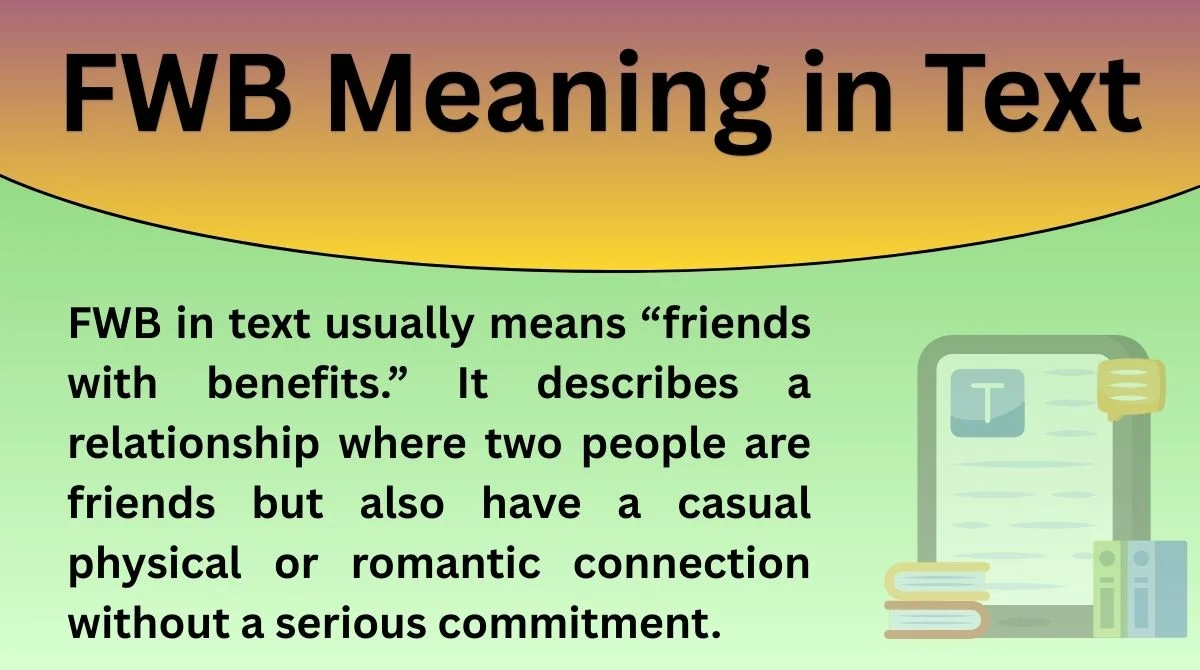
FWB in text usually means “friends with benefits.” It describes a relationship where two people are friends but also have a casual physical or romantic connection without a serious commitment.
In chats, the meaning is often straightforward. Someone might use FWB when talking about their relationship status, discussing dating preferences, or joking with friends. The tone depends on context. Sometimes it’s serious; other times it’s playful or sarcastic.
For example, if someone texts:
- “We’re just FWB, nothing serious.”
It means the relationship is casual and not exclusive.
The phrase became popular because it offers a short way to describe a modern relationship style. Instead of writing a long explanation, people use three letters. That’s why it appears often in dating conversations, group chats, and social media bios.
It’s important to remember that FWB is not always romantic. Sometimes people use it jokingly, like:
- “Pizza is my FWB 🍕😂”
Context always matters. Look at the conversation around the word to understand the true meaning.
Full Form, Stands For & Short Meaning of FWB
The full form of FWB is Friends With Benefits.
Let’s break it down:
- Friends → People who know each other socially.
- With benefits → Extra perks, usually physical or romantic.
So the short meaning is:
👉 A friendship that includes casual intimacy without a committed relationship.
People like using FWB because:
- It’s quick to type.
- It avoids awkward explanations.
- It’s widely understood online.
Sometimes the meaning can vary slightly:
- Casual dating without labels.
- A physical relationship with emotional boundaries.
- A humorous exaggeration of friendship.
Short meaning examples:
- “We’re FWB” → Casual relationship.
- “Looking for FWB” → Seeking a non-serious connection.
- “No FWB, I want something real.” → Preference for commitment.
Understanding the tone is key. The same letters can sound serious, funny, or even sarcastic depending on who says it and how.
Origin, History & First Known Use of FWB
The idea behind FWB relationships existed long before texting culture. However, the abbreviation “FWB” became popular with the rise of internet messaging and mobile phones in the early 2000s.
As texting grew, people started shortening phrases to save time. Relationship terms were no exception. Online forums, chat rooms, and early social media platforms helped spread the abbreviation quickly.
The phrase gained major attention in pop culture when movies and TV shows began exploring casual relationships openly. This made the term more mainstream and easier to recognize worldwide.
Over time, FWB moved from niche slang to everyday language. Today, it appears in:
- Dating apps
- Social media bios
- Text conversations
- Online memes
Language evolves with culture. As dating norms changed, the need for new terms grew. FWB became one of the most recognized relationship abbreviations because it describes a situation many people understand.
How People Use FWB in Daily Conversations
In everyday texting, FWB is used in both serious and casual ways. The meaning depends on who is talking and why.
Common daily uses include:
- Explaining a relationship status.
- Discussing dating boundaries.
- Joking with friends.
Examples:
- “We tried dating, now we’re just FWB.”
- “I don’t want FWB. I want something serious.”
- “Are you okay with FWB or looking for commitment?”
Sometimes people use it to test interest. They may mention FWB to see how the other person reacts. That’s why responses matter.
In friend groups, the term may appear humorously:
- “Gym is my FWB — I go when I need it 😂”
Tone clues:
- Serious tone → Relationship discussion.
- Casual tone → Friendly or humorous comment.
- Flirty tone → Suggestion or interest.
Understanding intent helps avoid misunderstandings.
FWB Meaning Across WhatsApp, Instagram, TikTok & Snapchat
The meaning of FWB stays mostly the same across platforms, but how people use it can change slightly depending on the audience and style.
On WhatsApp:
- Usually private conversations.
- More direct and personal meaning.
- Often serious relationship talk.
On Instagram:
- Appears in captions, bios, or comments.
- Sometimes used humorously or sarcastically.
- May refer to lifestyle jokes (food, hobbies).
On TikTok:
- Often used in storytelling or dating content.
- Can appear in memes and trends.
- Sometimes exaggerated for entertainment.
On Snapchat:
- Casual and spontaneous usage.
- Often in flirty or playful chats.
- May appear with emojis or slang.
Platform culture affects tone, but the core meaning stays “friends with benefits.”
Different Meanings of FWB in Other Fields
While FWB almost always means “friends with benefits” in texting, it can have other meanings in different industries or contexts.
Possible alternate meanings:
- Business: Fixed Wireless Broadband.
- Gaming: Friends With Bonus (rare variation).
- Finance: Foreign Wealth Bond (technical use).
- Healthcare: Fetal Well-Being (medical abbreviation).
These meanings are uncommon in casual chat. Context makes the difference clear. If you see FWB in a romantic or social conversation, it almost certainly refers to relationships.
Professional environments use abbreviations differently, so always check the topic before assuming meaning.
Common Confusions, Mistakes & Wrong Interpretations
People sometimes misunderstand FWB, which can lead to awkward situations.
Common mistakes:
- Thinking it means dating seriously.
- Assuming emotional commitment exists.
- Believing it always involves romance.
- Misreading jokes as serious offers.
For example:
- Someone says: “We’re just FWB.”
- Misinterpretation: “They’re in a relationship.”
- Actual meaning: Casual connection without commitment.
Another confusion happens when people use sarcasm:
- “Coffee is my FWB ☕”
This is clearly a joke, not a relationship statement.
To avoid confusion:
- Look at tone.
- Check conversation context.
- Ask politely if unsure.
Clear communication prevents misunderstandings.
Similar Terms, Alternatives & Related Slang
FWB is not the only slang for casual relationships. Many related terms exist online.
Similar slang:
- NSA → No Strings Attached.
- Situationship → Undefined relationship.
- Hookup → Casual meeting or intimacy.
- Talking stage → Early romantic interest.
- Casual dating → Non-serious dating.
Each term has small differences:
- NSA focuses on zero commitment.
- Situationship includes emotional confusion.
- FWB emphasizes friendship plus intimacy.
Examples of FWB in Real Chat Situations
Here are realistic chat examples:
- “We’re FWB, so no drama please.”
- “I don’t do FWB anymore.”
- “Are you looking for FWB or something serious?”
- “Lol he thinks we’re FWB but I caught feelings 😅”
- “Netflix partner = FWB 😂”
Quick examples:
- “Just FWB 👍”
- “FWB only, no relationship.”
- “Not interested in FWB.”
These short messages show how flexible the term can be.
How to Reply When Someone Says FWB
Your reply depends on your comfort level and intentions.
If interested:
- “I’m okay with that as long as we’re clear.”
- “Sure, but boundaries matter.”
If not interested:
- “I’m looking for something serious.”
- “That’s not really my thing.”
If unsure:
- “What do you mean exactly?”
- “Can we talk about expectations?”
Honest communication is best. Never agree just to please someone.
Is FWB Still Popular? Trends & Online Usage
Yes, FWB is still widely used in modern texting culture. Dating apps, social media, and online conversations keep the term relevant.
Reasons it remains popular:
- Short and easy to type.
- Describes a common relationship style.
- Recognized globally.
- Frequently discussed in dating content.
Younger audiences continue using it, but older groups understand it too. While slang evolves, FWB has stayed consistent because the concept itself remains common.
Trends may change wording slightly, but FWB is unlikely to disappear anytime soon.
FAQs
1. Does FWB mean dating?
Not exactly. It usually means a casual relationship without commitment.
2. Is FWB serious?
It can be casual or semi-serious depending on the people involved.
3. Can FWB turn into a relationship?
Yes, sometimes feelings develop and relationships change.
4. Is FWB only physical?
Usually physical plus friendship, but emotional connection varies.
5. Is FWB rude to say?
No, but context matters. Some people may feel uncomfortable with it.
Conclusion
Understanding FWB meaning in text is simple once you know the context.
It stands for “friends with benefits,” describing a casual relationship that includes friendship and intimacy without commitment.
The term became popular through texting culture and remains widely used across social media and private chats.
Like many slang terms, tone and intention matter.
Sometimes FWB is serious, other times it’s humorous.
Clear communication helps avoid confusion and ensures both people understand expectations.
Whether you’re seeing it in a message, dating profile, or meme, you now know exactly what it means and how to respond.
Language keeps evolving, but knowing common abbreviations like FWB helps you stay confident in modern conversations.

Freya Martin is a creative writer who loves playful wordplay, light humor, and engaging content for a global audience.