In today’s fast-paced digital world, acronyms and shorthand have become a staple of texting and online chatting. One term you may have come across is “FW”.
If you’ve seen it in a text, social media post, or chat app and wondered, “What does FW mean?”, you’re not alone.
People often search for this abbreviation to understand its context, whether in casual conversations, professional messages, or social media posts.
This guide will break down FW meaning in text, explain its origins, show real-life examples, and highlight how it’s used across platforms like WhatsApp, Instagram, TikTok, and Snapchat.
By the end, you’ll be able to confidently decode and use FW yourself!
What Does FW Mean in Text & Chat?
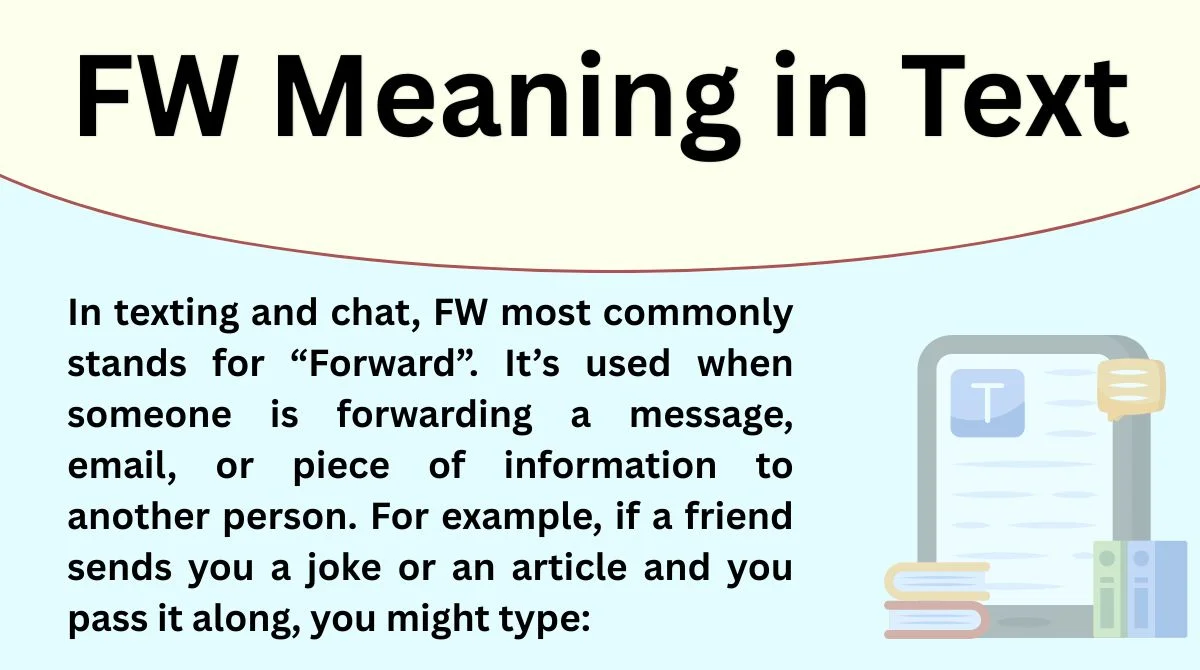
In texting and chat, FW most commonly stands for “Forward”. It’s used when someone is forwarding a message, email, or piece of information to another person. For example, if a friend sends you a joke or an article and you pass it along, you might type:
- “FW: Check this out 😂”
- “FW: Meeting agenda for tomorrow”
Aside from forwarding, FW can also mean “For What” in casual texting when someone is asking for clarification:
- “FW are we meeting later?” (equivalent to “For what are we meeting?”)
The meaning often depends on the context, the platform, and the relationship between the people chatting. Knowing this helps avoid confusion when you’re texting quickly.
Full Form, Stands For & Short Meaning of FW
Here’s a quick breakdown of FW full forms in text and chat:
- Forward – most common in emails and messages
- For What – casual questioning in chat
- Fashion Week – occasionally used on social media
- Framework – sometimes in professional or technical contexts
Short meaning in simple terms: FW = Forward or For What.
It’s a handy abbreviation that saves typing time and keeps conversations fast and concise.
Origin, History & First Known Use of FW
The abbreviation FW comes from the early days of email communication in the 1990s. Email clients like Outlook and Lotus Notes introduced the “FW:” prefix to indicate that a message had been forwarded from another sender. Over time, this usage spread into instant messaging apps and social media platforms.
In casual texting, the abbreviation FW as “For What” likely developed organically as people tried to type faster and shorten questions. Its history is less formal but reflects the natural evolution of internet slang, where brevity is key.
How People Use FW in Daily Conversations
In daily chats, FW appears in multiple ways:
- Forwarding messages: “FW: Party at my place 🎉”
- Asking a question: “FW do we need to bring snacks?”
- Referring to events: “FW Fashion Week 2024 is starting next week 👗”
Its versatility makes it useful, but context is everything. Using it incorrectly can lead to miscommunication. For example, a coworker might interpret FW as “Forward” while a friend reads it as “For What.”
FW Meaning Across WhatsApp, Instagram, TikTok & Snapchat
Different platforms affect how FW is understood:
- WhatsApp & Messenger: Mostly “Forward,” used for messages, links, or images.
- Instagram & TikTok: Could mean “Fashion Week” or “Forward” in comments and captions.
- Snapchat: Less formal; usually “Forward” or casual “For What” in quick snaps.
In general, social media favors creativity, so new meanings can emerge depending on trends.
Different Meanings of FW in Other Fields
Outside texting, FW can have other interpretations:
- Business & Tech: Framework (coding or project context)
- Sports: Forward (position in soccer or hockey)
- Fashion Industry: Fashion Week
Knowing these alternate meanings can help avoid confusion in mixed conversations, especially professional or hobby-related chats.
Common Confusions, Mistakes & Wrong Interpretations
People often misread FW because:
- They assume it’s always “Forward”
- They confuse it with “F***ing Wow” in extreme slang
- They mistake it for a technical term like “Framework” in work chat
The key is context: where it’s used, who sent it, and what the message is about.
Similar Terms, Alternatives & Related Slang
If you’re texting fast, you might also see:
- FWD – another way to say Forward
- FYI – For Your Information
- BRB – Be Right Back
- LOL – Laugh Out Loud
These abbreviations make chat quick and efficient while keeping the tone light and friendly.
Examples of FW in Real Chat Situations
- Work chat: “FW: Project update attached 📎”
- Friend group: “FW: Check this meme 😂”
- Fashion discussion: “FW Paris Fashion Week highlights 👗”
- Clarification: “FW do you need help with the homework?”
How to Reply When Someone Says FW
How you respond depends on the meaning:
- If Forward: “Thanks for sharing! 😄”
- If For What: Provide clarification: “We’re meeting to discuss the project.”
- If Fashion Week: “Love the looks! Which show did you like best?”
Using context helps maintain smooth, natural conversation.
Is FW Still Popular? Trends & Online Usage
Yes! While not as trendy as memes or new slang, FW remains widely used in professional and casual texting.
Email clients, WhatsApp forwards, and even social media captions keep it relevant. Trends like Fashion Week also give it a seasonal boost in certain circles.
FAQs
1. What does FW mean in emails?
- It stands for Forward, showing that a message was passed along.
2. Can FW mean “For What”?
- Yes, especially in casual texting when asking a question.
3. Is FW the same as FWD?
- Exactly! FWD is another abbreviation for Forward.
4. How do I know which FW meaning to use?
- Look at context: professional = Forward, casual = For What, social media = Fashion Week.
5. Is FW slang or formal?
- Both. Forward is formal, but For What is casual slang.
Conclusion
FW is a simple yet versatile abbreviation that can mean Forward, For What, Fashion Week, or even Framework, depending on context.
Understanding its usage makes chatting smoother, avoids misunderstandings, and keeps you in the loop whether you’re texting friends, emailing colleagues, or browsing social media.
The next time you see FW, you’ll know exactly what it stands for and how to respond, keeping your digital conversations quick, clear, and friendly.

Freya Martin is a creative writer who loves playful wordplay, light humor, and engaging content for a global audience.