If you’ve seen someone reply with “fr” in a text or comment and wondered what it means, you’re not alone.
The fr meaning in text is one of the most searched slang queries today, especially among people trying to keep up with modern digital conversations.
As texting, social media, and short-form content evolve, abbreviations like “fr” help people communicate faster and more casually.
This tiny two-letter term shows up everywhere—from WhatsApp chats to TikTok comments—and can carry different tones depending on context.
People search for it because it looks simple, yet it’s not always obvious what the sender intends.
In this guide, we’ll break down what “fr” means, where it came from, how it’s used, and how you should respond when someone drops it into a conversation.
What Does FR Mean in Text & Chat?
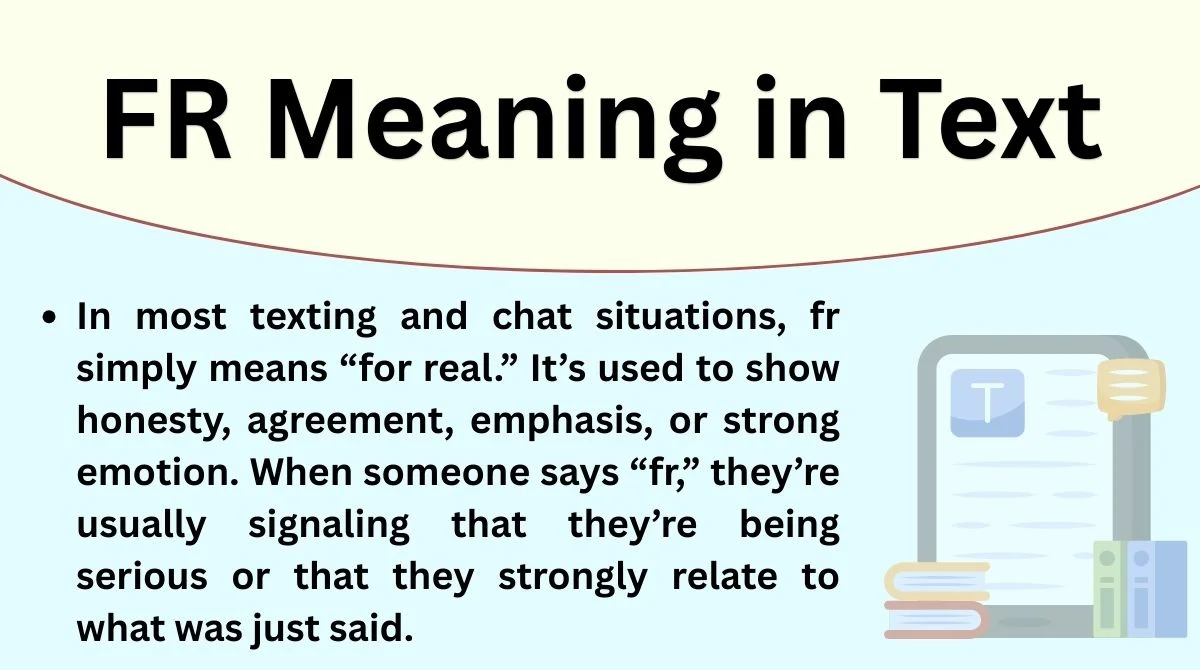
In most texting and chat situations, fr simply means “for real.” It’s used to show honesty, agreement, emphasis, or strong emotion. When someone says “fr,” they’re usually signaling that they’re being serious or that they strongly relate to what was just said.
For example, if someone complains about being tired and you reply “fr,” you’re basically saying, “I feel that too—seriously.” It can also work as a standalone reaction, similar to “same” or “true.”
The tone of “fr” depends heavily on context. Sometimes it sounds supportive, sometimes sarcastic, and sometimes shocked. Unlike longer phrases, it’s quick, casual, and fits naturally into fast-moving conversations.
Quick examples:
- “This weather is awful 😩” → “fr”
- “I’m never doing that again” → “fr tho”
- “You’re kidding, right?” → “fr?”
Because it’s informal, “fr” is best used in casual chats rather than professional communication.
Full Form, Stands For & Short Meaning of FR
The most common full form of fr in text is “for real.” That’s it—short, simple, and widely understood.
Short meanings include:
- For real (seriously)
- Truly
- Honestly
- I agree strongly
In some rare cases, “FR” can also stand for France, French, or Federal Republic, but those meanings usually appear in formal or non-chat contexts. In everyday texting, especially lowercase “fr,” people almost always mean “for real.”
Capitalization matters too. Lowercase “fr” looks casual and slangy, while uppercase “FR” may hint at a different meaning depending on context.
Tip: If it’s in a sentence about feelings, reactions, or opinions, it almost always means for real.
Origin, History & First Known Use of FR
The phrase “for real” has been part of spoken English for decades, especially in informal American speech. The abbreviation fr emerged naturally as texting culture grew and people looked for faster ways to express reactions.
Its rise closely followed:
- SMS texting limits
- Instant messaging apps
- Social media comment culture
By the early 2010s, “fr” started appearing more frequently on platforms like Twitter and Tumblr. Later, TikTok and Instagram helped push it into mainstream slang, especially among Gen Z users.
Unlike older abbreviations, “fr” didn’t come from internet forums—it came directly from spoken language. That’s why it feels natural and conversational rather than forced or technical.
How People Use FR in Daily Conversations
People use fr as a reaction, agreement, or emphasis. It rarely carries information by itself; instead, it adds emotion or validation.
Common uses include:
- Agreeing strongly with someone
- Showing disbelief or shock
- Emphasizing honesty
- Reacting without typing a full sentence
Examples in daily chat:
- “That exam was brutal” → “fr 😭”
- “I miss sleep” → “fr tho”
- “This is the best song ever” → “fr!”
It’s flexible, low-effort, and emotionally expressive—perfect for casual digital talk.
FR Meaning Across WhatsApp, Instagram, TikTok & Snapchat
The fr meaning in text stays mostly consistent across platforms, but the vibe changes slightly.
- WhatsApp: Agreement or empathy in private chats
- Instagram: Commenting “fr” under relatable posts
- TikTok: Reacting to videos you strongly relate to
- Snapchat: Quick replies to stories or messages
On TikTok especially, “fr” is often paired with “tho” (though), making it sound more expressive: “fr tho.”
Different Meanings of FR in Other Fields
Outside of texting, FR can mean different things:
- Geography: Country code for France
- Language: French (fr)
- Government: Federal Republic
- Finance: Financial reporting (rare)
Context is everything. In casual chats, these meanings almost never apply.
Common Confusions, Mistakes & Wrong Interpretations
People sometimes:
- Confuse “fr” with “FR” (France)
- Think it’s rude or dismissive
- Overuse it in formal messages
Avoid using “fr” in emails, work chats, or serious discussions unless you’re sure the tone is appropriate.
Similar Terms, Alternatives & Related Slang
Related slang includes:
- “ngl” (not gonna lie)
- “same”
- “deadass”
- “no cap”
- “facts”
Examples of FR in Real Chat Situations
- “I’m exhausted after today” → “fr 😴”
- “That movie was actually good” → “fr!”
- “This app is addictive” → “fr tho 😂”
How to Reply When Someone Says FR
Good replies include:
- “I know, right?”
- “Exactly!”
- “Same here”
- “Glad you agree 😄”
Match the tone—casual and friendly works best.
Is FR Still Popular? Trends & Online Usage
Yes, fr is still very popular. It remains common in TikTok comments, memes, and private chats. While slang constantly evolves, “fr” has stayed relevant because it’s simple, expressive, and easy to understand.
FAQs About FR Meaning in Text
1. Does fr always mean for real?
Yes, in texting and chat, almost always.
2. Is fr rude?
No, it’s usually supportive or neutral.
3. Can I use fr in professional chats?
Not recommended—it’s informal slang.
4. What does fr tho mean?
“For real though,” adding extra emphasis.
5. Is fr a Gen Z word?
Mostly, but people of all ages use it now.
Conclusion
The fr meaning in text is simple but powerful.
Short for “for real,” it’s a quick way to show agreement, honesty, or strong emotion in digital conversations. Its popularity comes from how naturally it fits into modern texting culture—no extra explanation needed.
Whether you’re replying to a relatable meme, reacting to a message, or emphasizing a point, “fr” helps keep conversations flowing smoothly.
Just remember to use it in casual settings and read the context carefully.
Once you understand how flexible it is, you’ll spot—and probably use—it everywhere.

Freya Martin is a creative writer who loves playful wordplay, light humor, and engaging content for a global audience.