When people search for “emphasize meaning in text,” they usually want to understand how emphasis works in messages, chats, and social media posts.
In face-to-face conversations, tone of voice and body language help highlight important words.
But in text messages, those signals disappear.
Because of this, people use different tricks—like capitalization, repetition, emojis, or formatting—to emphasize meaning in text and make their message clearer.
Understanding how emphasis works in digital communication helps avoid confusion.
A small change in formatting can make a message sound serious, excited, sarcastic, or urgent.
From WhatsApp chats to TikTok comments, emphasis shapes how readers interpret a message.
In this guide, you’ll learn how people emphasize meaning in text, where the idea came from, and how it appears in everyday online conversations.
What Does Emphasize Mean in Text & Chat?
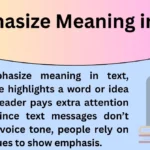
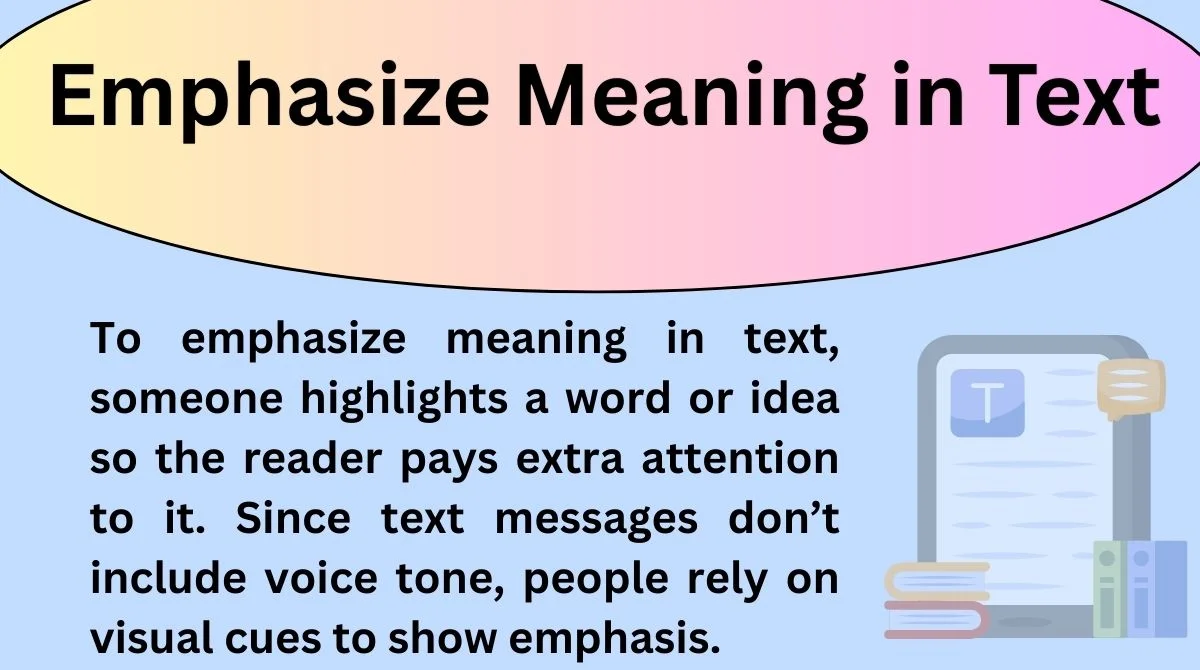
To emphasize meaning in text, someone highlights a word or idea so the reader pays extra attention to it. Since text messages don’t include voice tone, people rely on visual cues to show emphasis.
Common ways to emphasize meaning in text include:
- Capital letters: “I said I’m READY.”
- Extra punctuation: “This is amazing!!!”
- Word repetition: “I’m so so happy.”
- Formatting: italics or bold in some apps
- Emojis: “I’m serious 😅”
These techniques help communicate emotion or urgency.
Quick Chat Examples
- “I really need that file today.”
- “This movie is SO good!”
- “Don’t forget the meeting tomorrow!!!”
- “I’m not joking 😂”
In simple terms, emphasizing meaning in text helps a reader understand what matters most in the message.
Full Form, Stands For & Short Meaning of Emphasize
Unlike many internet abbreviations, “emphasize” does not have a full form or acronym meaning. Instead, it is a normal English verb used in digital communication.
Short Meaning
Emphasize:
To give special importance to a word, idea, or part of a message.
In texting and online chats, emphasis usually appears through formatting or style rather than grammar.
Common Ways People Show Emphasis
People often replace spoken emphasis with visual cues:
- ALL CAPS for strong emotion
- Italics for subtle emphasis
- Bold text for important information
- Multiple punctuation marks
- Emojis that reinforce tone
Example
- Normal: “I like this song.”
- Emphasized: “I love this song!”
Even small changes can alter how a message feels.
Origin, History & First Known Use of Emphasize
The word “emphasize” comes from the Greek word emphainein, which means “to show clearly” or “to present strongly.” It entered the English language in the 18th century.
Originally, emphasis referred mostly to spoken language. Speakers would raise their voice, slow down, or stress certain words to highlight meaning.
With the rise of digital communication—emails, forums, and messaging apps—people needed new ways to recreate emphasis without voice tone.
Evolution in Digital Communication
Over time, internet users developed creative methods:
- Early Internet (1990s)
- Use of ALL CAPS for emphasis.
- Repeated punctuation like “!!!”.
- Forums & Blogs (2000s)
- Introduction of formatting like bold and italics.
- Social Media Era (2010s–present)
- Emojis and GIFs add emotional emphasis.
- Repetition and spacing are common.
Example trend:
- “This is good.”
- “This is GOOD.”
- “This is sooooo good.”
Each version increases the level of emphasis.
How People Use Emphasize in Daily Conversations
In everyday digital conversations, people constantly try to emphasize meaning in text so their message sounds clear and expressive.
Without emphasis, a message may appear neutral or even cold.
Situations Where People Add Emphasis
People emphasize text when they want to:
- Show excitement
- Highlight important information
- Express frustration
- Add humor
- Clarify tone
Example Chat Scenarios
Excitement
- “That concert was AMAZING!!! 🎉”
Urgency
- “Please send the report TODAY.”
Friendly emphasis
- “I really appreciate your help.”
Sarcasm
- “Oh wow… that was great.”
Why It Matters
A small change in emphasis can change meaning completely.
Example:
- “Fine.”
- “Fine!”
- “FINE.”
Each version carries a different emotional tone.
Emphasize Meaning Across WhatsApp, Instagram, TikTok & Snapchat
Different social platforms use different styles to emphasize meaning in text.
WhatsApp supports simple formatting.
Examples:
- italics using asterisks
- bold text
- ~strikethrough~
Example chat:
- “I really need help with this.”
Instagram comments often rely on:
- Emojis
- Capital letters
- Repeated letters
Example:
- “This outfit is SOOO good 🔥”
TikTok
TikTok comments emphasize emotion using:
- Emojis
- Short phrases
- Dramatic capitalization
Example:
- “THIS PART 😭”
Snapchat
Snapchat messages usually emphasize tone with:
- Emojis
- Bitmojis
- Short expressive phrases
Example:
- “You did WHAT?! 😂”
Each platform shapes how people highlight their message.
Different Meanings of Emphasize in Other Fields
While most people think of texting, emphasize is used in many areas.
Education
Teachers emphasize key ideas so students remember them.
Example:
- “The teacher emphasized the importance of practice.”
Writing
Writers use emphasis to guide readers to important points.
Methods include:
- Bold headings
- Repetition
- Strong wording
Public Speaking
Speakers emphasize ideas by:
- Changing tone
- Pausing
- Repeating words
Marketing
Marketers emphasize benefits of a product.
Example:
- “This phone emphasizes battery life and speed.”
Even though the context changes, the core idea remains the same: highlight something important.
Common Confusions, Mistakes & Wrong Interpretations
Sometimes attempts to emphasize meaning in text can lead to misunderstandings.
Common Mistakes
Using too many capital letters
- “THIS IS AMAZING!!!”
May sound like shouting.
Too many emojis
- “I’m serious 😂😂😂😂”
This may confuse the tone.
Overusing punctuation
- “Are you coming??????”
May feel aggressive.
Misinterpretations
Readers may interpret emphasis differently.
Examples:
- Caps may seem angry.
- Italics may seem sarcastic.
- Repetition may appear dramatic.
The key is balance.
Similar Terms, Alternatives & Related Slang
Several words and phrases relate to emphasizing meaning in text.
Similar Words
- Highlight
- Stress
- Reinforce
- Underline
- Spotlight
Related Internet Slang
Some slang expressions naturally add emphasis.
Examples:
- “Literally”
- “For real”
- “No joke”
- “I swear”
Example:
- “That movie was literally the best.”
Formatting Tricks
People also emphasize with:
- spacing like this
- repeated letters
- emojis
Example:
- “I am sooooo tired 😩”
Examples of Emphasize in Real Chat Situations
Here are realistic examples showing how people emphasize meaning in text.
Example Conversations
Example 1
- Friend: “Did you like the movie?”
- You: “Yes, I loved it!”
Example 2
- Coworker: “Is the meeting today?”
- Reply: “Yes, at 3 PM sharp.”
Example 3
- Friend: “Was the exam hard?”
- Reply: “SO hard 😭”
Example 4
- Chat message:
- “Please don’t forget the deadline tomorrow!”
These examples show how emphasis clarifies emotion.
How to Reply When Someone Uses Emphasis in Text
When someone emphasizes words in text, it usually means they want you to notice something important.
How to Respond
Acknowledge the point
- “Got it! I’ll send it today.”
Match the tone
- “That sounds AMAZING! 🎉”
Ask for clarification
- “Do you mean it’s urgent?”
Quick Reply Examples
- “Okay, I understand.”
- “Wow, that sounds exciting!”
- “Thanks for highlighting that.”
Responding appropriately keeps conversations smooth.
Is Emphasize Still Popular? Trends & Online Usage
Yes—people constantly look for ways to emphasize meaning in text, especially as messaging becomes the main form of communication.
Current Trends
Letter stretching
- “soooo good”
Emoji emphasis
- “Best day ever 😍”
Minimalist emphasis
- “This. Right here.”
Short dramatic phrases
- “THE END.”
Social media trends change quickly, but emphasis remains essential because it helps express emotion in text-only conversations.
FAQs
1. What does emphasize mean in text messages?
It means highlighting an important word or idea so the reader understands the tone or priority of the message.
2. How do people emphasize words in texting?
Common methods include capital letters, bold formatting, repetition, emojis, and extra punctuation.
3. Is using ALL CAPS considered emphasizing?
Yes, but it can also sound like shouting, so it should be used carefully.
4. Can emojis emphasize meaning in text?
Yes. Emojis often reinforce emotion or tone in a message.
Example:
- “That was amazing 😍”
5. Why is emphasis important in online communication?
Because text messages lack voice tone and body language, emphasis helps clarify emotion, urgency, and intent.
Conclusion
Understanding how people emphasize meaning in text is essential for modern communication.
Since digital messages lack vocal tone and facial expressions, people rely on creative techniques like capitalization, emojis, repetition, and formatting to highlight important ideas.
These small visual cues help express emotion, urgency, and intent.
From casual WhatsApp chats to viral TikTok comments, emphasis shapes how readers interpret a message.
However, balance is key—too much emphasis can confuse or overwhelm the reader.
When used thoughtfully, it makes conversations clearer, more expressive, and more engaging.
As online communication continues to grow, the ways we emphasize meaning in text will keep evolving.
But the goal will always remain the same: making sure the reader understands exactly what matters most.

Freya Martin is a creative writer who loves playful wordplay, light humor, and engaging content for a global audience.