If you’ve seen the term “DTF” in a message or online chat, you might wonder what it means.
Many people search for DTF meaning in text because slang changes fast, and context matters.
A word that looks simple can carry very different meanings depending on who says it and where it appears.
DTF is a popular internet abbreviation often used in casual conversations, dating apps, and social media.
Sometimes it has a bold or adult tone, but not always.
Understanding it helps you avoid confusion and respond the right way.
In this guide, you’ll learn the full form, origin, common uses, examples, and how to reply when someone sends DTF.
Everything is explained in clear, simple language so anyone can understand it.
What Does DTF Mean in Text & Chat?
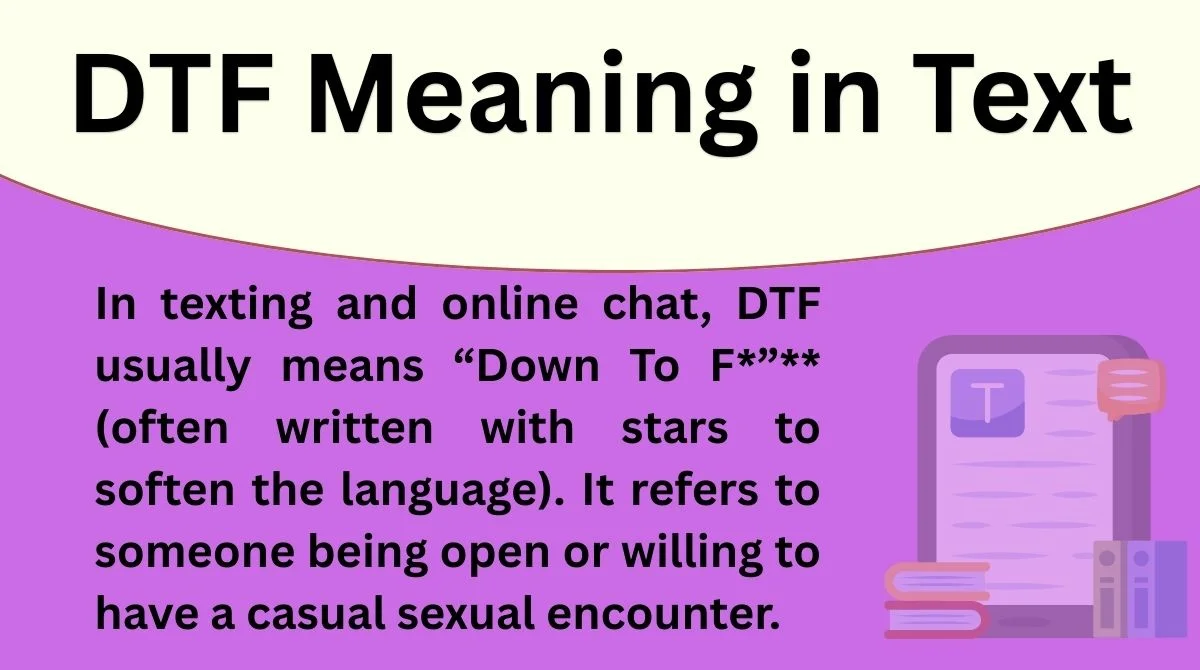
In texting and online chat, DTF usually means “Down To F*”** (often written with stars to soften the language). It refers to someone being open or willing to have a casual sexual encounter.
However, context is important. Some people also use DTF in a lighter or joking way to mean:
- Ready to hang out
- Open to doing something fun
- Willing to join an activity
For example:
- “Are you DTF tonight?” → Could mean going out or something more intimate.
- “I’m DTF for pizza 🍕” → Clearly joking and harmless.
Because the phrase has a strong adult meaning, tone and relationship matter a lot. Friends may use it playfully, while strangers might mean it seriously.
Key points:
- It often appears in dating conversations.
- It can be humorous or direct.
- It may be inappropriate in formal settings.
Always consider who is speaking before assuming the meaning.
Full Form, Stands For & Short Meaning of DTF
The most common full form of DTF is:
Down To F* (Down to have sex)**
Short meaning: Willing or interested in a casual hookup.
But slang evolves, so alternate playful meanings exist:
- Down To Fun
- Down To Fiesta
- Down To Food
These softer versions appear when people want humor without sounding explicit.
Quick summary:
- Formal meaning: None (it’s slang).
- Tone: Casual, sometimes bold.
- Usage: Mostly between adults or peers.
Because of its adult nature, DTF is rarely used in professional communication.
Origin, History & First Known Use of DTF
The phrase “down to” meaning “willing to” has existed in English for decades. But DTF became popular with the rise of internet culture and texting.
A major boost came from reality TV in the late 2000s, especially dating-focused shows where cast members used the phrase openly. Soon after, it spread across forums, memes, and social media.
Why it grew fast:
- Short and easy to type
- Shock value made it memorable
- Dating apps normalized direct language
Today, DTF is recognized worldwide as internet slang. Even people who never use it often still know what it means.
How People Use DTF in Daily Conversations
People use DTF in different ways depending on their personality and relationship.
Common situations include:
- Flirting conversations
- Dating app chats
- Jokes between friends
- Party planning messages
Examples:
- “You DTF this weekend? 😏”
- “I’m DTF for a road trip!”
- “Not DTF, I’m tired lol.”
Tone clues:
- Emojis like 😏 suggest flirting.
- Food or activities suggest humor.
- Direct questions suggest serious intent.
If you’re unsure, it’s okay to ask for clarification.
DTF Meaning Across WhatsApp, Instagram, TikTok & Snapchat
On different platforms, the meaning stays similar, but the tone may change depending on the audience.
Often used in private chats between friends or romantic interests.
Seen in DMs, captions, or memes. Sometimes used jokingly.
TikTok
Appears in comments or videos, often humorous or exaggerated.
Snapchat
Common in casual or flirting conversations due to the app’s private nature.
Platform tip: The more private the platform, the more likely the meaning is serious.
Different Meanings of DTF in Other Fields
Outside slang, DTF can mean other things depending on the industry.
Examples:
- Printing: Direct to Film (a printing method)
- Sports: Down To Fight
- Business: Dedicated Task Force
- Gaming: Down To Farm
So context is everything. A designer talking about DTF probably means printing, not slang.
Common Confusions, Mistakes & Wrong Interpretations
Many people misunderstand DTF because it looks harmless.
Common mistakes:
- Thinking it always means “fun”
- Using it in professional chats
- Assuming everyone is comfortable with it
- Misreading jokes as serious interest
Important tip: When unsure, ask politely instead of guessing.
Similar Terms, Alternatives & Related Slang
Other slang terms with similar meanings include:
- NSA — No Strings Attached
- FWB — Friends With Benefits
- Hookup
- Smash (slang)
- Link up
Softer alternatives:
- “Want to hang out?”
- “You free tonight?”
These are safer in mixed company.
Examples of DTF in Real Chat Situations
Here are realistic chat examples:
- “You DTF later? 😉”
- “I’m DTF for burgers anytime 🍔”
- “Not DTF, I’ve got work tomorrow.”
- “She asked if he was DTF.”
- “We’re just friends, not DTF lol.”
These show both serious and playful uses.
How to Reply When Someone Says DTF
Your reply depends on your comfort level.
If interested:
- “Maybe 😏 what did you have in mind?”
- “Yeah, I’m free tonight.”
If not interested:
- “No thanks.”
- “Not my thing.”
- “I’d rather just hang out as friends.”
If confused:
- “What do you mean by DTF?”
Clear communication avoids awkwardness.
Is DTF Still Popular? Trends & Online Usage
DTF is still widely used, but trends shift over time.
Current patterns:
- Still common on dating apps
- Used more jokingly among Gen Z
- Sometimes replaced by newer slang
- Recognized globally
Even if usage declines, the term remains culturally known.
FAQs
1. Is DTF always sexual?
Most of the time, yes. But friends may use it jokingly for activities.
2. Is DTF rude?
It can be, depending on context and relationship.
3. Can girls use DTF too?
Yes. Anyone can use the term.
4. Is it safe to use DTF at work?
No. It’s informal and often inappropriate professionally.
5. What does DTF mean on dating apps?
Usually willingness for a casual hookup.
6. Does DTF mean relationship interest?
Not usually. It often implies something casual.
Conclusion
Understanding DTF meaning in text helps you navigate modern conversations with confidence.
While the most common meaning is “Down To F***,” context always matters.
Friends may use it jokingly, while dating situations may use it seriously.
Knowing the tone, platform, and relationship between people makes interpretation easier.
Language online changes fast, but awareness keeps communication clear and respectful.
If you’re ever unsure, asking directly is the best approach.
Slang should make conversations fun — not confusing or uncomfortable.

Freya Martin is a creative writer who loves playful wordplay, light humor, and engaging content for a global audience.