If you’ve seen DPWM pop up in a text message or social media chat and felt confused, you’re not alone. Internet slang evolves fast, and new abbreviations often appear without warning.
People usually search for “dpwm meaning in text” after encountering it on WhatsApp, Instagram, TikTok, or Snapchat and wondering what the sender actually meant.
DPWM is one of those short, context-driven expressions that can feel unclear at first glance. Its meaning depends heavily on tone, relationship, and platform.
In this guide, we’ll break down what DPWM means, where it came from, how it’s used in real conversations, and how to respond naturally.
By the end, you’ll know exactly when DPWM is friendly, flirty, sarcastic, or something else entirely.
What Does DPWM Mean in Text & Chat?
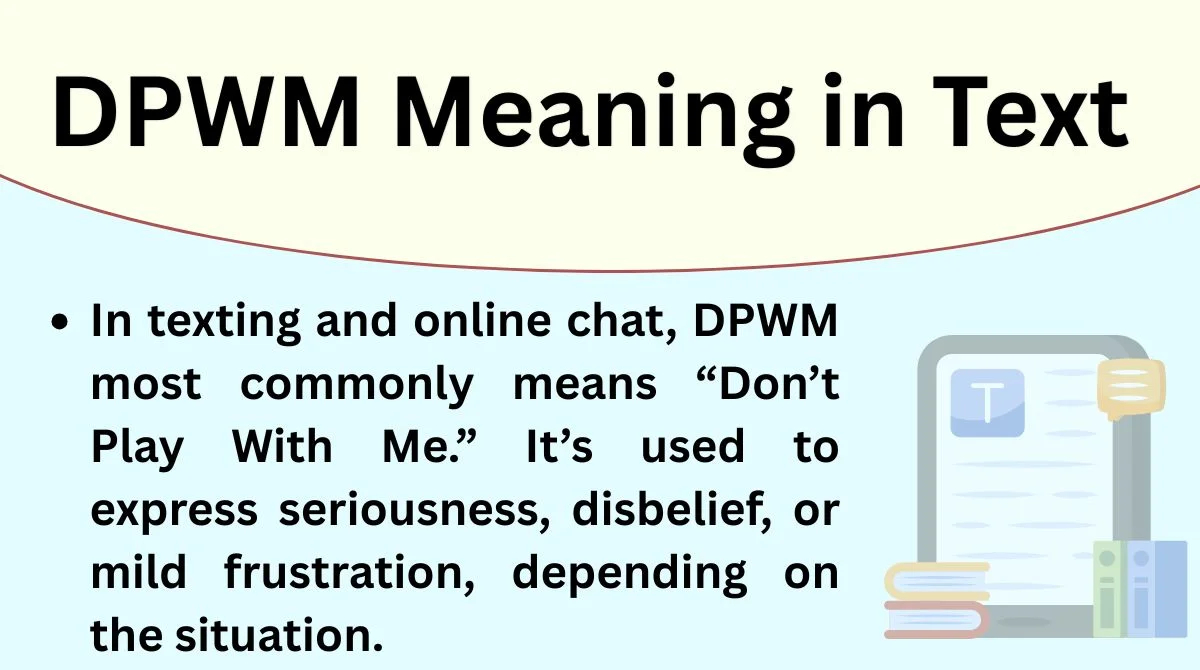
In texting and online chat, DPWM most commonly means “Don’t Play With Me.” It’s used to express seriousness, disbelief, or mild frustration, depending on the situation.
When someone says DPWM, they’re usually signaling that they want honesty or clarity — not jokes, exaggeration, or mixed signals. The tone can range from playful to confrontational, so context matters a lot.
Quick meanings based on tone:
- Playful: “Be serious 😂”
- Firm: “I’m not joking right now”
- Confrontational: “Stop messing with me”
DPWM often appears in casual conversations between friends, couples, or people who know each other well. It’s rarely used in formal communication and is mostly found in fast-paced digital chats.
Full Form, Stands For & Short Meaning of DPWM
DPWM stands for:
- Don’t Play With Me
Short meaning:
- “I’m serious”
- “Stop joking”
- “Tell me the truth”
People like DPWM because it’s short, expressive, and emotionally loaded. Instead of writing a full sentence, the abbreviation quickly delivers attitude and intent.
In some rare cases, DPWM may be interpreted humorously or sarcastically, especially when paired with emojis or laughter. Still, the core idea remains the same: the speaker wants to be taken seriously.
Origin, History & First Known Use of DPWM
DPWM originated from spoken slang, especially in casual English conversations, long before it became a text abbreviation. As texting and social media shortened communication, the phrase naturally evolved into an acronym.
Its rise is closely tied to:
- SMS texting culture
- Twitter and Instagram captions
- TikTok comment sections
While there’s no exact first recorded use, DPWM gained noticeable popularity in the late 2010s as conversational slang moved heavily into digital spaces. Like many abbreviations, it spread through repetition, memes, and influencer usage rather than formal dictionaries.
How People Use DPWM in Daily Conversations
DPWM is usually used when emotions are involved — surprise, disbelief, annoyance, or playful seriousness.
Common situations include:
- Reacting to shocking news
- Calling out sarcasm
- Asking for honesty
Quick examples:
- “You got the tickets already? DPWM 😳”
- “DPWM, are you actually serious right now?”
- “If this is a joke, DPWM.”
Tone is everything. The same DPWM can feel flirty, funny, or tense depending on the context.
DPWM Meaning Across WhatsApp, Instagram, TikTok & Snapchat
Although the meaning stays mostly the same, platform culture affects tone:
- WhatsApp: More personal, often serious or emotional
- Instagram: Casual, playful, sometimes flirty
- TikTok: Often humorous or dramatic in comments
- Snapchat: Lighthearted, paired with emojis or selfies
Example:
- “DPWM 😭” → disbelief
- “DPWM 😏” → playful challenge
Different Meanings of DPWM in Other Fields
Outside texting, DPWM is not widely used, but it can occasionally stand for technical terms in niche industries. However, these meanings are rare and usually irrelevant in casual chat.
If you see DPWM in a message, it almost always means “Don’t Play With Me.”
Common Confusions, Mistakes & Wrong Interpretations
People sometimes misread DPWM as:
- Anger when it’s playful
- A joke when it’s serious
Mistakes to avoid:
- Ignoring the tone
- Responding too casually to a serious DPWM
- Assuming it’s always negative
When unsure, read the full message — not just the acronym.
Similar Terms, Alternatives & Related Slang
Related expressions include:
- FR? (For real?)
- No cap
- Be serious
- Stop playing
- You joking?
Examples of DPWM in Real Chat Situations
- “You met my favorite artist? DPWM 😭”
- “DPWM, don’t lie to me.”
- “If this is a prank, DPWM 😂”
- “DPWM right now… is that true?”
How to Reply When Someone Says DPWM
Your reply should match their tone:
- If serious: “I’m being serious.”
- If playful: “I swear I’m not joking 😅”
- If emotional: “I promise I mean it.”
Mirroring tone helps keep the conversation smooth.
Is DPWM Still Popular? Trends & Online Usage
Yes — DPWM is still actively used, especially among younger users and on social platforms. While it’s not as mainstream as “LOL” or “OMG,” it remains relevant in expressive, emotional conversations. Its flexibility keeps it alive in modern slang culture.
FAQs
1. What does DPWM mean in texting?
It usually means “Don’t Play With Me.”
2. Is DPWM rude or aggressive?
Not always. It depends on tone and context.
3. Can DPWM be playful?
Yes, especially when paired with emojis or jokes.
4. Is DPWM used by a specific age group?
Mostly teens and young adults, but not exclusively.
5. Should I use DPWM in professional chats?
No — it’s best kept for casual conversations.
Conclusion
Understanding the DPWM meaning in text helps you read between the lines of modern digital conversations.
While it simply stands for “Don’t Play With Me,” its emotional weight can vary from playful disbelief to firm seriousness.
Context, emojis, and your relationship with the sender all shape its meaning.
As online language keeps evolving, acronyms like DPWM show how people compress emotion into just a few letters.
Knowing when — and how — to use or respond to it can save you from misunderstandings and awkward replies.
Whether you see it on WhatsApp, Instagram, or TikTok, you’re now fully equipped to understand DPWM like a native texter.

Freya Martin is a creative writer who loves playful wordplay, light humor, and engaging content for a global audience.