In today’s digital world, much of our communication happens through text messages, social media, and online chats.
Because tone, facial expressions, and voice are missing, people often rely on slang, abbreviations, emojis, and context clues to express themselves.
This is where decoding meaning in text becomes important.
It simply means figuring out what someone truly intends to say, beyond the literal words on the screen.
Many people search for this topic because they want to avoid misunderstandings, interpret messages correctly, or learn internet slang.
Whether you’re texting friends, chatting at work, or scrolling through social media, knowing how to decode messages helps you communicate better.
This guide will explain the meaning, usage, examples, and trends in a simple, friendly way so anyone can understand.
What Does “Decoding” Mean in Text & Chat?
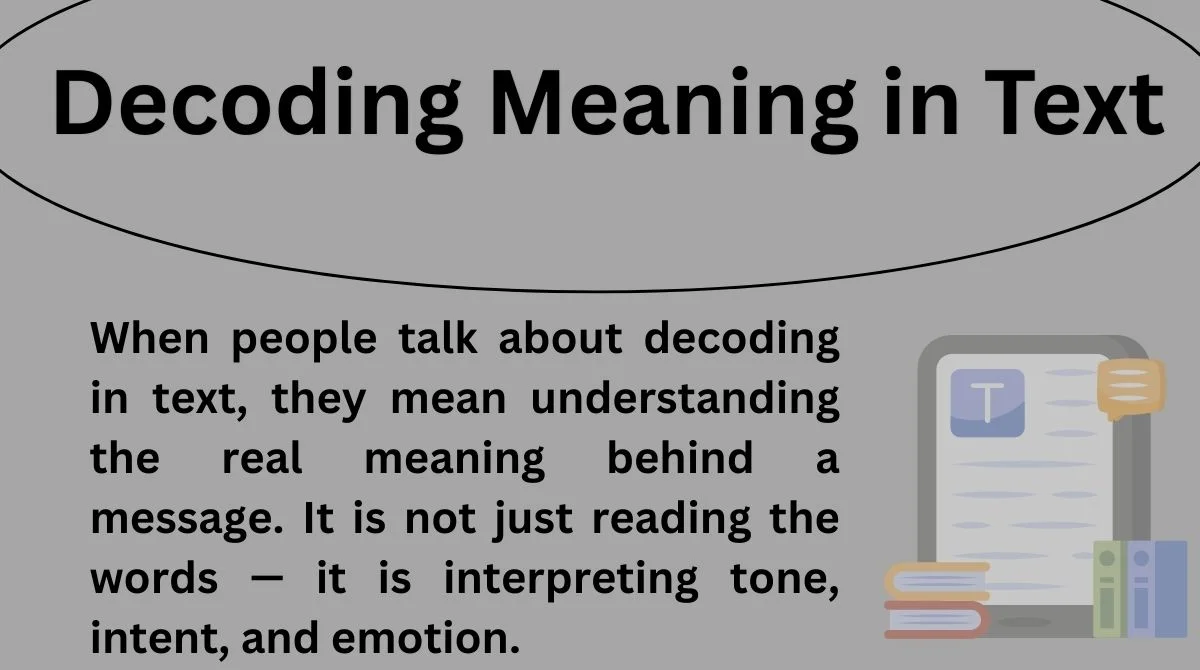
When people talk about decoding in text, they mean understanding the real meaning behind a message. It is not just reading the words — it is interpreting tone, intent, and emotion.
For example, the message “Sure.” can mean different things depending on context:
- Friendly agreement
- Annoyance
- Sarcasm
- Indifference
Decoding helps you figure out which meaning is correct.
In digital conversations, people often use:
- Abbreviations (LOL, BRB, IMO)
- Emojis 😊😂😒
- Punctuation (!!!, …)
- Capital letters (WHY??)
Each element adds extra meaning. Without decoding skills, messages can easily be misunderstood.
Another key part is context. The same sentence may mean different things depending on the relationship between people, previous messages, or situation.
For instance:
- “We need to talk.” → Could be serious or casual.
- “Okay…” → Could show hesitation or disappointment.
Decoding also involves emotional intelligence. You consider how the sender feels and why they wrote it that way.
In short, decoding meaning in text is like reading between the lines. It helps prevent confusion and improves communication in digital life.
Full Form, Stands For & Short Meaning of Decoding
Unlike internet abbreviations, the word decoding is not a slang acronym. It is a normal English term.
Short meaning:
Decoding = Understanding or interpreting a message correctly.
The word comes from the idea of “code.” A code hides information. Decoding reveals it.
In texting, decoding means:
- Understanding tone
- Interpreting emojis
- Recognizing sarcasm
- Reading emotional signals
People sometimes use phrases like:
- “I’m trying to decode your message.”
- “What are you really saying?”
- “Hard to decode texts sometimes.”
It is especially common when:
- Messages are unclear
- Someone uses short replies
- Tone feels confusing
- Mixed signals appear
In psychology and communication studies, decoding is part of the communication process:
- Sender creates message
- Receiver decodes meaning
In everyday texting, we do this automatically. But misunderstandings happen when decoding fails.
So the short version:
Decoding meaning in text = figuring out what someone actually means.
Origin, History & First Known Use of Decoding
The word decode has been used for centuries. It originally came from communication systems involving secret codes, military signals, and encryption.
Historical background:
- Early use related to cryptography
- Used in wartime intelligence
- Applied to language learning and reading skills
- Later adopted in digital communication
When texting and internet messaging became popular in the 1990s and 2000s, decoding took on a new meaning. It started referring to interpreting informal digital language.
Technology changed communication in three big ways:
- Messages became shorter
- Tone disappeared
- Symbols replaced words
Because of this, people needed to decode meaning more actively.
Social media platforms increased this need even more. Emojis, memes, and slang created new layers of meaning.
Today, decoding is not just about language. It includes:
- Cultural understanding
- Online trends
- Emotional awareness
- Social context
The concept continues evolving as digital communication grows.
How People Use Decoding in Daily Conversations
People use the idea of decoding whenever they try to understand unclear messages.
Common situations include:
- Romantic conversations
- Friend group chats
- Workplace communication
- Social media comments
Examples:
- “He said ‘k’… I’m trying to decode what that means.”
- “Her reply felt cold. Hard to decode.”
- “I can’t decode his texts.”
Sometimes decoding is necessary because people avoid direct communication. They hint instead of saying things clearly.
Reasons messages need decoding:
- Fear of conflict
- Shyness
- Humor or sarcasm
- Passive-aggressive tone
- Emotional complexity
In relationships, decoding becomes very common. People analyze:
- Response time
- Word choice
- Emoji use
- Message length
For example:
- Long message → Interest
- Short reply → Possible disinterest
- No emoji → Neutral or serious tone
However, over-decoding can also cause anxiety. Not every message has hidden meaning.
Healthy communication tip:
If confused, ask directly instead of guessing.
Decoding Meaning Across WhatsApp, Instagram, TikTok & Snapchat
Each platform has its own communication style. Decoding depends on where the conversation happens.
- More personal conversations
- Voice notes add tone clues
- Read receipts create meaning (“seen but no reply”)
- DMs often casual
- Reactions (❤️🔥😂) replace words
- Story replies require interpretation
TikTok
- Comments include slang and memes
- Tone often humorous or sarcastic
- Context comes from video content
Snapchat
- Short messages
- Streak culture affects meaning
- Emojis next to names add signals
Examples:
- “Left on read” → May feel ignoring
- “Typing… then stopped” → Uncertainty
- “😂” alone → Could mean awkward laughter
Platform culture strongly affects decoding. What feels rude on one app may feel normal on another.
Different Meanings of Decoding in Other Fields
Decoding is not only used in texting. It has multiple meanings in different areas.
Technology
- Converting encoded data into readable form
- Example: video decoding, file decoding
Education
- Reading skills
- Understanding written language
Psychology
- Interpreting communication signals
- Understanding behavior
Biology
- Genetic decoding (DNA information)
Media & Film
- Analyzing hidden themes or symbolism
Despite different uses, the core idea stays the same:
Turning something unclear into something understandable.
Common Confusions, Mistakes & Wrong Interpretations
Many misunderstandings happen because people decode messages incorrectly.
Common mistakes:
- Assuming tone without evidence
- Overthinking punctuation
- Ignoring context
- Projecting personal feelings
- Misreading sarcasm
Examples of wrong decoding:
- “Okay.” → Not always angry
- “Lol” → Sometimes just polite
- No emoji → Not always cold
- Late reply → Could be busy, not ignoring
Another confusion is cultural difference. Communication styles vary between regions and age groups.
Younger users may interpret emojis differently than older users.
Important reminder:
Text lacks emotional cues, so errors happen easily.
Similar Terms, Alternatives & Related Slang
Words related to decoding meaning in text include:
- Interpreting
- Understanding
- Reading between the lines
- Analyzing messages
- Figuring out tone
Related slang phrases:
- “What do you mean?”
- “Say it straight.”
- “Mixed signals”
- “Hidden meaning”
- “Subtext”
Examples of Decoding in Real Chat Situations
Here are realistic chat examples.
Example 1
- Person A: “Do whatever you want.”
- Person B thinking: Maybe upset 😬
Example 2
- Person A: “Sure lol”
- Possible meanings:
- Real agreement 😂
- Awkward situation 😅
- Sarcasm 🙃
Example 3
- Person A: “We’ll see.”
- Could mean:
- Maybe
- No
- Not interested
Quick examples:
- “K.” → Short, neutral, or annoyed
- “😂😂” → Very funny or nervous laugh
- “…” → Thinking or hesitation
- “Fine.” → Often emotional tone
Context decides everything.
How to Reply When Someone Says Something Hard to Decode
If you receive a confusing message, try these steps:
1. Ask politely
- “What do you mean?”
- “Just to be clear…”
2. Clarify tone
- “Are you joking?”
- “You serious?”
3. Avoid assumptions
Don’t jump to negative conclusions.
4. Use your own clarity
- “I’m not sure I understood.”
5. Use emojis if needed
They help show emotion 😊
Good replies:
- “Haha okay 😄”
- “Got it 👍”
- “Can you explain a bit more?”
Clear communication reduces confusion.
Is Decoding Still Popular? Trends & Online Usage
Yes, decoding meaning in text is more relevant than ever.
Reasons:
- More digital communication
- Rise of remote work
- Social media messaging
- Online dating
- Global conversations
New trends affecting decoding:
- Gen Z slang
- Meme language
- Reaction emojis
- Voice notes
- AI communication tools
Short messages are increasing, which means people rely more on interpretation skills.
However, many experts encourage clearer communication instead of forcing others to decode.
Future prediction:
Decoding will remain important as long as text communication exists.
FAQs
1. What does decoding mean in texting?
It means understanding the real meaning or emotion behind a message.
2. Why is decoding text messages difficult?
Because tone, voice, and facial expressions are missing.
3. How can I avoid misinterpreting texts?
Ask questions, check context, and avoid assumptions.
4. Do emojis help with decoding meaning?
Yes. Emojis add emotional clues to messages.
5. Is overthinking texts common?
Very common. Many people analyze messages too much.
6. What is the difference between encoding and decoding?
Encoding is creating a message. Decoding is understanding it.
Conclusion
Decoding meaning in text is an essential skill in modern communication.
Since digital messages lack tone and body language, people must rely on context, wording, emojis, and timing to understand intent.
While decoding helps avoid confusion, it is also important not to overthink every message.
Clear communication works both ways — senders should express themselves clearly, and receivers should ask when unsure.
As online conversations continue growing across platforms like messaging apps and social media, decoding skills will remain valuable.
The key is balance: pay attention to clues, but don’t assume hidden meanings without evidence.
When in doubt, simply ask. Good communication is always better than guessing.

Freya Martin is a creative writer who loves playful wordplay, light humor, and engaging content for a global audience.